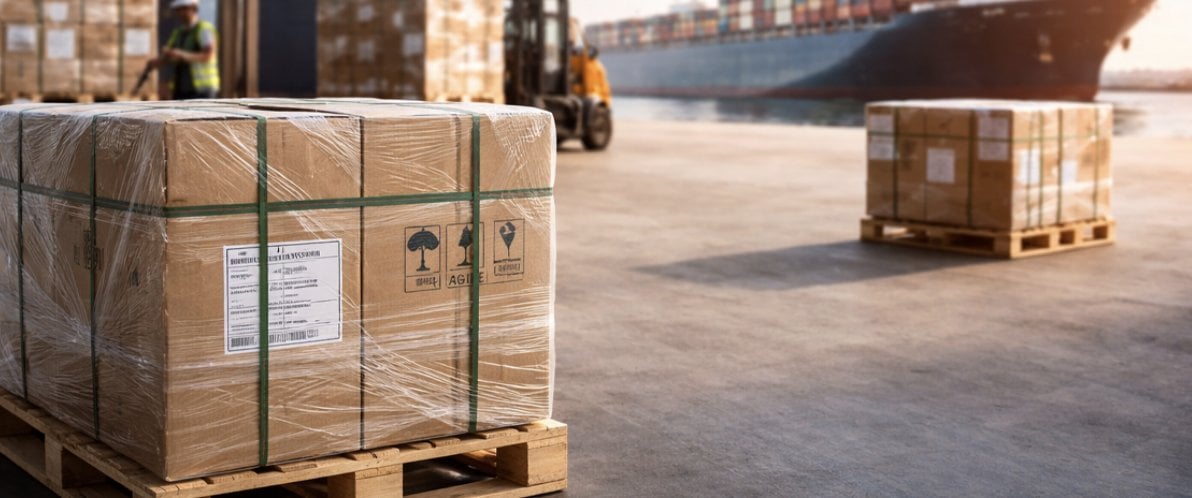
The world of global trade offers “high-stakes” risks. Considering both physical and regulatory hurdles, the journey from the factory floor to the end customer is full of challenges. And these challenges can make a huge difference between a profitable shipment and a total loss for any business.
To cope with the challenges, companies, freight forwarders, and logistics managers have been considering the qualities of export-ready packaging.
Can export packaging actually reduce damage, delays, and costs in international shipping? Let’s discuss all the aspects in detail.
The Cost of Using Poor Packaging in International Shipping
Using poor-quality packaging can really cause great damage and financial impact. As of today, the data suggests that roughly 65% of most recurring cargo damage incidents are caused by poor-quality product packing or securing. Globally, this translates into $6 billion of annual losses.
Packaging failure is mentioned in many trade corridors as a leading cause of cargo insurance claims, such as theft or natural disasters.
The “beyond-the-scene” of immediate product replacement value is poor packaging. It creates a "domino effect" of indirect costs. One of the biggest points is that when packaging is made from non-compliant materials, it leads your business to lengthy customs holds. Also, think about damaged arrivals that can destroy your business reputation and strain buyer relationships.
When customers reject your products due to transit damage, your business has to face the triple burden:
- Product reshipping expenses
- Environmental waste from returned or discarded products
- The administrative nightmare of insurance litigation
This means that you should never treat your packaging as an afterthought; it deserves to be treated as a core part of your logistics strategy. Considering the impact of freight costs, make sure you have and understand the proper cargo insurance details. This way, you can achieve safe logistics and ensure customers receive your product in one complete piece.
International Packaging Requirements
One-size-fits-all is never a solution for shipping packaging, and especially for international shipping. The international packaging requirements indicate that you need to tailor your packaging to the vessels and equipment used in the shipping.
Yes, the container's conditions decide how much protection your packaging must provide. This applies whether you plan to ship using a 20ft container, a 40ft High Cube container, or a special refrigerated container.
Although you can easily track the container and view the environments, the real, physical defense starts with your box.
FCL vs. LCL
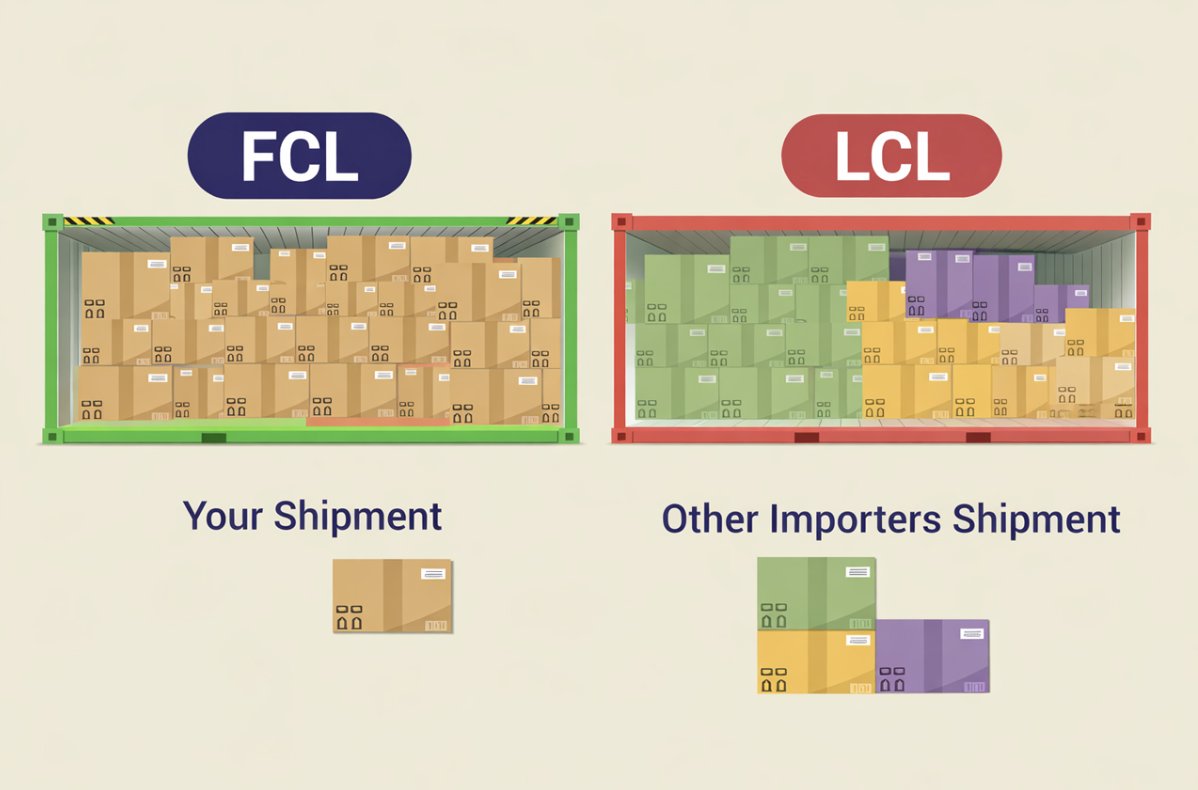
Shipping products in Full Container Load (FCL) gives you complete control over the interior space. Perform strategic container loading optimization to maximize every cubic inch in this context.
Meanwhile, Less-than-Container-Load (LCL) shipments might give you higher risks during shipping. The reasons? This shipment requires your products to share space with others in freight. This means your international shipping packaging must be highly durable to withstand all the possible hazards like shifting, contamination, or even crushing with heavier cargo. For the safe side, do not forget to track the container’s environment where your packaging will be sitting during transit.
Special Shipments
A different case happens if you are shipping through specialized equipment like temperature-controlled reefer containers. You will need specific packaging for ocean freight that facilitates vertical airflow. The packaging should keep your product cold all the time.
You need to choose packaging made from materials that can withstand bad weather and rough handling, especially when shipping big items on flat racks or open-top containers without a cover. This type of packaging helps your product combat exposure to the environmental elements and extreme sea motion.
Understanding the Regulatory Compliance and Regional Standards
Complying with regulatory standards helps your business clear customs and transit planning. Accordingly, product packaging that fails to meet international regulations is a major driver in this transit delay.
ISPM-15
Also known as ISPM-15, the International Standards for Phytosanitary Measures No. 15 sets all the regulations about shipping with wood packaging. Wood pallets, crates, or dunnage—they all must be heat-treated or fumigated before shipping. And you need to apply an official seal on them, too.
Fail to comply with these shipping regulations?
The entire shipment will be quarantined. In the worst scenario, your product will be sent back to you, along with the shipping expense.
Ista Testing Protocols
The International Safe Transit Association (ISTA) standards are widely applied by companies to mitigate the potential shipping risks. These testing protocols simulate the hassles of the supply chain. Yes, we are talking about vibration, compression, and atmospheric changes. Getting ISTA certification provides a "stamp of approval." This type of approval gives both freight forwarders and insurance financiers higher confidence to ensure that packaging can withstand the entire supply chain.
Regional Regulations
Shipping products internationally means you must navigate the regional rules. Make sure you check and note the EU’s strict packaging waste directives and Australia’s biosecurity inspections.
In essence, your business must understand the international shipping regulations and regional standards. Once you understand them, implement all these rules in your transit planning to ensure your products move through customs checkpoints without delay or administrative friction.
Reshaping International Shipping with Packaging Innovations
Technology is rapidly transforming how businesses protect and deliver products. The packaging industry continues to evolve, offering technological innovations. And this is changing the way products are packaged for global shipping.
Choose Sustainable packaging materials
Modern businesses are avoiding single-use plastic that can harm the planet. To replace it, there are a lot of packaging materials to pick from. You can go with biodegradable cushioning that can break down naturally. Specialized mushroom-based insulators are also readily available. And we should not forget to mention durable corrugated boards made from recycled pulp here. Speaking of complying with the strict rules of the EU Packaging and Packaging Waste Regulations, sustainable packaging materials are all you need.
Consider Smart Packaging
Smart packaging is also reshaping the global shipping standards with layers of innovative features.
- Embedded Shock Sensors
Devices that feature piezoelectric elements or accelerometers serve as cargo damage prevention. They detect and set down impact forces or sudden drops during transportation to keep your product safe from damage.
- Tilt Indicators
These tamper-proof indicators activate and change color when your package is tilted beyond a specific angle. As a result, they ensure your product remains upright.
- Humidity Monitors
Sensors that use capacitive or resistive technology. Their main goal is to monitor moisture levels within a package and its environment.
This "smart" layer provides real-time visibility that enables your business to see exactly when and where your package was mishandled. The smart way to identify any weak links during transit.
Custom-Engineered Packaging
Custom-engineered packaging is another innovation that reshapes international shipping. Now businesses can globally ship even fragile or irregularly shaped products safely by relying on custom boxes designed to match exact product dimensions. By perfectly measuring the boxes, businesses can further reduce void fill and minimize movement during ocean and air transit.
Having the right-sized packaging helps your business eliminate excess space. Moreover, it secures the product from shocks inside the box during sudden stops. The best part? Accurately sized packaging significantly reduces dimensional weight shipping charges—a critical cost factor in air and LCL ocean freight. At the same time, you can improve container utilization rates and optimize the freight costs.
The Essential Factors in Packaging and Freight Cost Optimization
Making strategic packaging decisions can directly affect your cost control. By optimizing your packaging, your business can significantly lower the freight costs you will have to pay.
Let’s break down the details.
Minimize Dimensional Weight Pricing & Improve Palletization
All carriers charge based on the actual weight or volumetric size. Oversized or poorly fitted boxes will make you pay for air shipping, the most unnecessary cost.
To tackle this challenge, apply palletization best practices. For example, consider using column-stacking to maintain structural strength. You can also avoid "pallet overhang." Both strategies keep your products stable, and there will be no cubic space wasted.
Insurance implications
The fact is that cargo insurance does not cover all losses regardless of cause. Most policies even have clauses that void coverage if you cannot meet freight packaging requirements. If an underwriter determines that your packaging was insufficient for the journey, the cargo insurance claim will be declined. So, make sure you use high-quality packaging materials as a form of self-insurance that protects the validity of your professional policy.
Preparing Your Export-Ready Packaging
Export-ready packaging is the one you need to achieve safe international shipment and minimize the cost.
- Make sure you complete the checklist below when preparing your export packaging.
- Obtain and verify ISPM-15 compliance stamps if you are planning to ship products in wood pallets.
- Accurately measure your custom shipping boxes to minimize movement and reduce DIM-weight shipping costs.
- Perform the stacking strength audit to ensure the bottom layers can support the weight of a full container.
- Don’t forget to include moisture barriers (desiccants/vapor wraps) in your packaging for ocean freight.
- Conduct the ISTA standards testing protocols according to your shipping mode.
- Research the standard regulations of the country you need to ship your products to.
- Remember to calculate dimensional weight during the design phase to avoid shipping "air."
- Apply clear, multilingual handling labels that suit your products’ needs, like Fragile or This Side Up.
- Record and document the entire packing process of your product to help you with insurance claims.
- Proper end-to-end shipping management prevents your business from facing issues such as product damage, delays, and high costs.
The Takeaway
In the complex environment of international shipping, your packaging should never be a last-minute thought. Instead, every business should consider using export-ready packaging to shield its product during long-distance international shipping.
Implement all the required packaging standards and comply with regulations; your international shipping will protect your profits, your business’s reputation, and your ability to scale globally.
Explore more opportunities with SeaRates by [contacting us] according to your interest category