

As automation continues to redefine modern logistics, autonomous trucking stands on the precipice of global transformation. From pilot programs to real-world applications, 2025 marks a turning point in our journey toward fully autonomous logistics.
Introduction: The Autonomous Trucking Revolution Gains Momentum
Self-driving vehicles, once the stuff of science fiction, are rapidly gaining acceptance as the trucking industry struggles to address long-standing challenges, such as driver shortages, inefficiencies, and safety. As autonomous technology has evolved, logistics giants, regulators, OEMs (original equipment manufacturers), and tech companies have worked to integrate this technology into the industry, and, despite the challenges, their work is about to pay off.
2025 is expected to be a pivotal year for the trucking industry, which is poised for a significant transformation through increased autonomous truck deployment. According to Precedence Research, the global autonomous truck market is expected to hit a record valuation of roughly $1.74 billion, reflecting the rapid advancement and adoption of autonomous trucking technologies worldwide.
In China, which leads the way in large-scale autonomous truck deployment, Beijing-based Inceptio Technology recently completed a landmark delivery of 400 self-driving heavy trucks to logistics carrier ZTO Express. In 2024, one of the first on-road autonomous trucking trials began in Germany and has proven successful. In the US, another pilot program uses autonomous semi-trucks in commercial service on oilfield routes.
In this article, we’ll explore the global landscape of autonomous truck deployment in 2025, key use cases, technological advancements, challenges, and considerations, and what the future holds for the industry.
Global Deployment Landscape in 2025: Who's Leading the Charge?
The commercial acceptance and adoption of self-driving vehicles are worldwide phenomena, but certain countries and regions, including China, Europe, and the United States, are leading the way.
Here’s a closer look:
United States
More than 1,400 autonomous vehicles (AVs) are being tested across multiple states in the US, with Michigan, Arizona, Texas, and California leading deployment efforts. California has issued over 60 self-driving vehicle testing permits, making it the country’s most active testing hub. In Texas and Arizona, lawmakers have embraced autonomous trucking by allowing driver-out testing and commercial freight operations, highlighting that while the National Highway Traffic Safety Administration (NHTSA) offers voluntary guidance, regulating autonomous trucks remains a state-led effort.
While companies like Waymo, Cruise, Tesla, and Zoox continue to refine passenger-focused AVs in the United States, Kodiak Robotics, Aurora, and Gatik are advancing autonomous vehicle deployments there. For example, Kodiak has partnered with major freight firms in Texas for driverless deliveries. At the same time, Gatik operates autonomous box trucks for Walmart in Arkansas, generating critical real-world data to enhance safety, improve efficiency in freight automation, and inform future regulations.
Europe
While the United States has played a pivotal role in deploying passenger AVs, Europe remains at the forefront of instituting autonomous trucking to improve global logistics. Countries like Germany, Sweden, and the Netherlands are leaders in the testing and deployment of self-driving trucks.
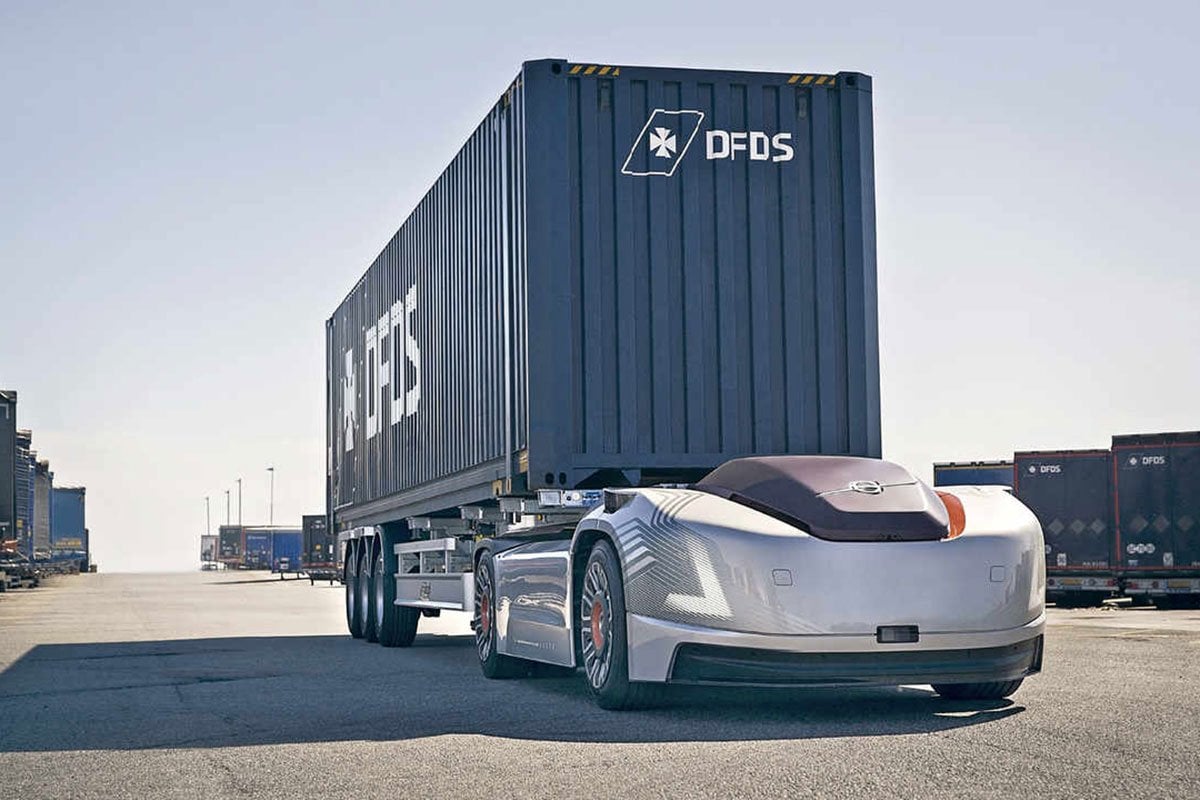
Sweden's Einride, for example, has initiated commercial operations using Level 4 autonomous trucks on fixed routes across several European nations. However, Germany took the lead in 2021 and set a precedent for other countries by passing legislation to allow Level 4 autonomous vehicle operations in designated areas without human intervention. In the European Union, lawmakers are working toward a unified regulatory framework to facilitate cross-border autonomous trucking.
The desire for cross-border freight automation in Europe continues to gain momentum, and the autonomous truck market has grown significantly. Strategic regional initiatives, cross-border collaboration, and strong regulatory support underscore Europe’s commitment to remaining a lead player in the advancement of autonomous trucks.
China
While Europe may be a strong advocate for the autonomous driving movement, China is rapidly scaling its autonomous trucking capabilities through strong government backing and expansive deployment efforts. Major tech hubs like Beijing, Shanghai, and Shenzhen have established autonomous driving zones with policies encouraging real-world testing and integration into national logistics networks.
The Chinese government has taken a central role in accelerating adoption, issuing supportive policies through initiatives like “Made in China 2025,” a national strategic plan launched in 2015 to transform the country from a low-cost manufacturing hub into a global leader in high-tech industries. China has also launched city-level pilot programs allowing autonomous driving on public roads.
Inceptio Technology is one of the key players leading China’s autonomous freight movement. In late 2024, the company delivered 400 autonomous trucks to logistics giant ZTO Express, marking one of the world’s largest deployments to date. These self-driving trucks are now actively used in long-haul freight automation throughout China. With over 2,000 trucks equipped with Inceptio's autonomous driving system already operating in commercial fleets, the country’s autonomous logistics sector is leveraging self-driving technology to address labor shortages, enhance safety, and improve the efficiency of its fast-growing e-commerce and express delivery networks.
Other Regions
The US, Europe, and China aren’t the only participants in a global race to become leaders in autonomous logistics and freight automation.
More than 30 AV tests are ongoing across multiple sectors in Australia, involving various autonomous technologies, from self-driving taxis to autonomous mining trucks. Cities like Brisbane, Melbourne, and Sydney are at the forefront of the effort. Sydney currently boasts one of the Southern Hemisphere’s largest AV bus trials.
Japan currently has more than 100 AV test sites, and its autonomous vehicle market, which includes autonomous trucks, is projected to exceed $4 billion by 2030. South Korea’s K-City is one of the world’s most advanced AV test sites. K-City provides a realistic environment for driverless vehicles, including self-driving cargo trucks.
These examples prove that advancements in freight automation and global logistics are not limited to just a few players.
Key Use Cases in 2025: Where Are Autonomous Trucks Making a Difference?
Autonomous trucks are transforming everything from streamlined port logistics and regional distribution routes to e-commerce fulfillment and the movement of resources in sectors like mining and agriculture.
Hub-to-Hub Operations
The first phase in the widespread use of autonomous logistics involves constrained autonomy in hub-to-hub operations. In this scenario, human drivers handle the first mile (from manufacturer to warehouse) and the last mile (from fulfillment center to customer), while self-driving trucks do the heavy lifting across highways between designated transform points or hubs. Hub-to-hub operations make it easy to adopt technologies incrementally because they operate under controlled conditions within geofenced areas.
Autonomous hub-to-hub operations can result in optimized logistics, efficient processing, enhanced flexibility, and reduced transit times, leading to faster deliveries and improved customer satisfaction. They can also lead to significant long-haul transportation cost savings by leveraging economies of scale through consolidation and potentially reducing labor costs.
Several companies, including Kodiak Robotics, Aurora Innovation, Torc Robotics, Waabi, and Gatik, are actively pursuing autonomous hub-to-hub operations in the US. Some have already deployed or tested their technology.

Port Automation
Autonomous trucks are revolutionizing port logistics by streamlining processes, increasing efficiency, and reducing costs through automated container handling and yard operations. This will ultimately enhance the speed and reliability of supply chains.
Port yards worldwide are reaping the benefits of specific technologies, such as Automated Terminal Tractors (ATTs) and Autonomous Mobile Robots (AMRs). Leading ports like Singapore’s Tuas Port, one of the most advanced automated terminals in the world, are setting the standard for next-generation logistics.
Meanwhile, companies like Kodiak Robotics are developing long-haul autonomous trucks that interface with port terminals, enabling seamless freight movement from ship to warehouse via connected highway corridors.
E-commerce Delivery
While full-scale implementation is still a ways off, autonomous trucks have the potential to revolutionize logistics by connecting fulfillment centers more efficiently and cost-effectively, enabling 24/7 operations, reducing labor costs, and optimizing routes. This could lead to faster delivery times and reduced inventory needs. It can also help to address labor shortages in the trucking industry.
Resource Transportation
Autonomous trucks are increasingly used in resource transportation for mining and agriculture. They offer significant safety and efficiency advantages in this sector by reducing human error, allowing 24/7 operation, and optimizing routes.
OEMs like Caterpillar and Komatsu have helped bring freight technologies to the mining truck market, while mining corporations are already successfully transporting mined materials with self-driving trucks. Over six years, for example, Rio Tinto transported 200 million metric tons of iron ore using a fleet of autonomous trucks.
Technological Advancements Driving Deployment
Several advancements in autonomous technology are accelerating the deployment of self-driving trucks and transforming their role in logistics for 2025 and beyond.
AI and Sensor Fusion
Autonomous trucks feature a range of advanced technologies, including AI-powered perception systems and sensors like radar, lidar, and cameras, that collect real-time data about immediate surroundings. These features let self-driving trucks analyze and perceive their surroundings precisely.

Connectivity and V2X Communication
Connectivity and V2X (vehicle-to-everything) communication are crucial for safety, efficiency, and overall system performance. They enable autonomous trucks to share real-time information with their environment and other road users. V2X communication can have a particularly positive impact on safety and traffic flow. It adds another level of awareness by letting the vehicle "see" beyond the range of its sensors. For example, it can pinpoint a car rapidly approaching a blind corner.
Electric and Hydrogen-Powered Autonomous Trucks
Autonomous trucks powered by electric or hydrogen fuel cell technology are emerging as a key area of focus in the trucking industry. They have the potential to improve safety, efficiency, and sustainability. In 2025, companies like Hyundai will continue collaborating to develop and test Level 4 autonomous fuel-cell electric trucks. Hyundai has already created a Class 8 fuel cell electric truck undergoing initial autonomous driving assessments in the US.
Challenges and Considerations
While 2025 is poised to be a banner year for automation technologies in the global logistics sector, challenges associated with deploying self-driving trucks remain.

Regulatory Hurdles
Harmonizing regulations globally is a challenge in freight automation, particularly with self-driving trucks. A fragmented regulatory landscape can hinder cross-border operations, requiring ongoing dialogue between innovators, regulators, and the public. This is particularly true in Europe, where different certification standards and regulatory timelines prevent the seamless implementation of cross-border autonomous operations.
Public Perception and Safety Concerns
Although global transportation strategies continue to highlight the potential of AVs, and many nations are planning to slowly phase them in through the next decade, widespread public acceptance remains elusive. To improve public confidence, industry leaders and lawmakers must prioritize transparent safety testing, robust regulations, and the societal benefits of autonomous driving technology, including enhanced safety and accessibility.
Infrastructure Requirements
For the successful implementation of self-driving trucks into global logistics networks, infrastructure must evolve beyond the current standard. That includes the need for improved road quality, dedicated lanes, charging stations, smart road markings, robust communication networks, and standardized regulations.
The UK, the EU, and China have already made significant progress with initiatives to facilitate the safe and efficient integration of autonomous trucks into the transportation system. Still, there is more work to be done.
Workforce Transition
While there remains a significant fear, industry-wide, that the implementation of self-driving trucks in the global logistics landscape will displace workers, the transition to autonomous trucking will likely involve a shift in job roles rather than outright displacement. New opportunities in remote vehicle operation, fleet management, and AI/AV technology support are already emerging. This shift will require a dedicated approach to workforce training and development.
The Road Ahead: What to Expect Beyond 2025
As freight automation technology advances, wider adoption is expected across long-haul and mid-mile global logistics. Beyond 2025, we’ll likely see fleets of fully autonomous trucks operating without safety drivers, expanded integration with electric and hydrogen-powered platforms, and deeper alignment with smart city infrastructure. Use cases will grow beyond freight to include mobile warehousing and dynamic delivery networks.
These advancements mirror trends in the consumer vehicle space as well, where the rise of self-driving cars is reshaping expectations around car ownership, mobility, and the future of transportation.
Advances in AI, connectivity, and vehicle-to-everything (V2X) communication will further enhance safety, efficiency, and scalability. As regulations evolve and public confidence grows, autonomous trucks will become a cornerstone of modern global logistics, reshaping how goods move, not only across regions but across continents.
Explore more opportunities with SeaRates by [contacting us] respective to your interest category