

The previous 5 years of crises in the supply chain industry might change with smooth global trade in 2026. However, the 2 main triggers may become louder. We’re talking about the possibility of the sudden opening of the Red Sea and the Suez Canal and massive stockpiling (front-loading) in the US.
Basic forecasts for average freight rate costs in 2026 provide a decrease of 30–35%, compared with 2025: up to $2,200–3,200 for 40’HC from Asia to the US West Coast.
However, sudden shocks, such as the opening of the Red Sea or massive restocking in the US, could push prices to $9,500+ in a matter of weeks. In this article, you will find the five key factors that will determine your logistics budget in 2026, based on the latest market data for November 2025.
Factor №1: +1.4 million TEU of new vessels, but where to?
The global container ship fleet will grow by 1.4 million TEU in 2026 (+5% of total capacity). However, 70–80% of these vessels will go to secondary destinations: Africa, Latin America, and India, where demand is growing by 10–15% annually.
On key trade routes between Asia and Europe and Asia and the US, tonnage shortages will persist, keeping rates from dropping. As a result, main routes will stay busy, with volatility of around $2,000–3,000 due to GRI (General Rate Increase) and PSS (Peak Season Surcharge).
Factor №2: Decommissioning of 13% of the global fleet
More than 13% of the current fleet (which is over 4 million TEU) is over 20 years old and ready for decommissioning. Thus, the 2-3% increase in new production capacity is naturally offset, and the market remains more balanced.
The market expects a mild cyclical downturn where rates on Asia–Northern Europe routes will remain at $3,500–4,500, without a sharp collapse below $1,800.
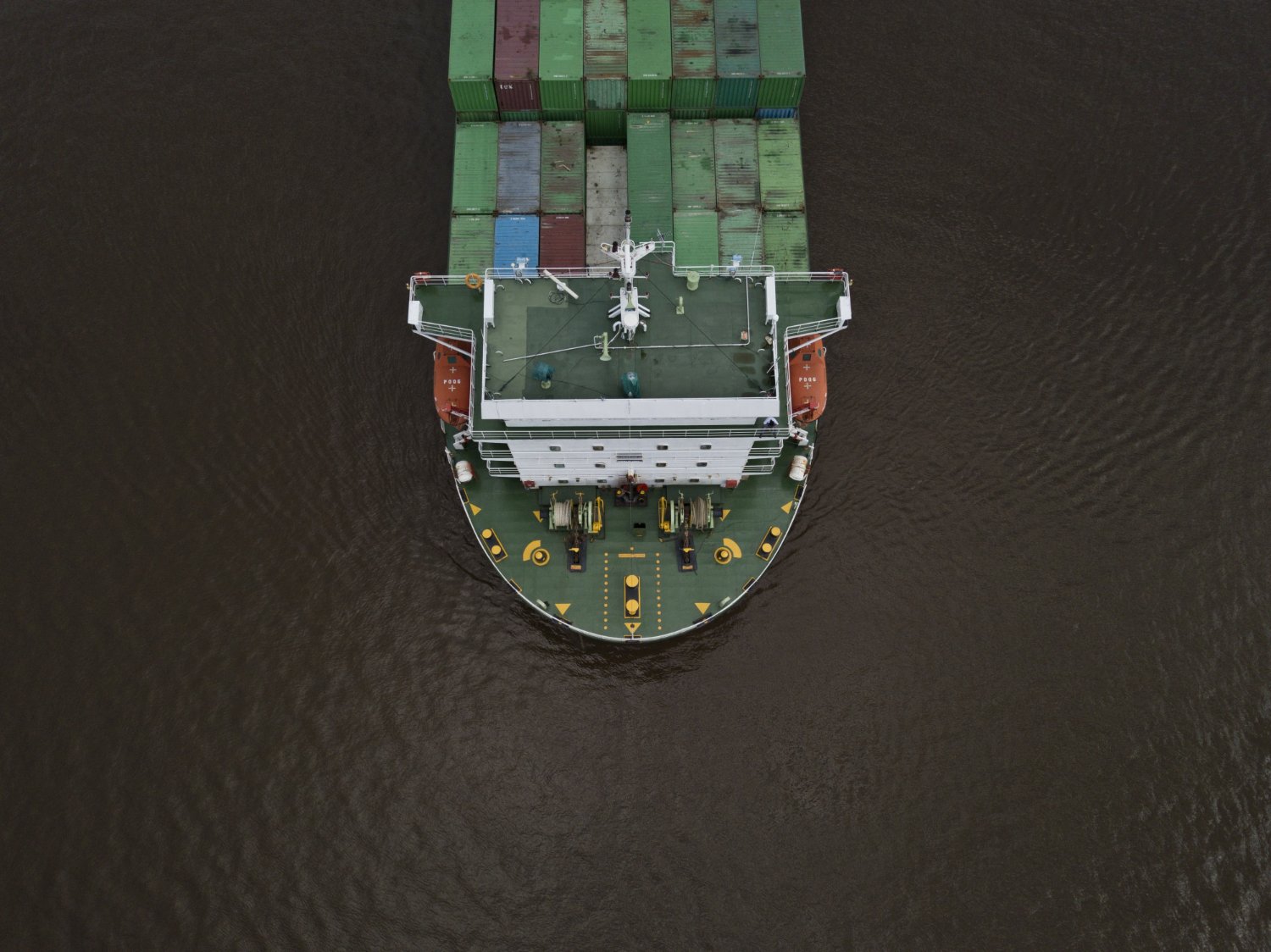
Carriers such as Maersk and MSC are already optimizing routes to avoid excess capacity. How?
- Maersk and Hapag-Lloyd in Gemini Alliance have restructured 57 services to a hub-and-spoke model and reduced the number of direct voyages — this “stretches” the available tonnage and prevents it from “hanging” on the main routes.
- MSC and CMA CGM are actively introducing blank sailings (5–10% of flights canceled in November–December 2025) and keeping 1–2% of their fleet in lay-up.
- 70–80% of new vessels entering service in 2026 will be directed to secondary trades (Africa, Latin America, and India) rather than Asia–Europe/US (Factor №1).
Factor №3: Red Sea
For 95% of ships worldwide, the Suez Canal has been bypassed since December 2024 due to geopolitical risks. Sailing around the Cape of Good Hope in South Africa.
However, there is a possibility (40-50% in the first half of 2026) of the canal suddenly opening for trade. Why? Because the truce has been in place for 10 months, Houthi attacks have officially stopped, insurance premiums have fallen to 0.3–0.7%, and carriers (ZIM, CMA CGM) are already testing a return and are ready to enter the Red Sea as soon as there are fewer than one or two attacks per month.
In this case, the market will receive +15-20% tonnage overnight.
What are the consequences?
- 4–8 weeks of chaos in European ports, as ship calls will double per week;
- Congestion charges of $1,500–3,000 per container
- Shortage of 40'HC in Asia for 2–3 months;
- A logistics collapse by rail and road is also predicted, as warehouses and land transport will need a lot of time to adapt to intermodal transportation and container trucking.
Factor №4: Front-loading in the US
It's like a slow-motion bomb. American importers are being pretty careful right now and only ordering what they need because of tariffs on stuff from China. Suppliers have switched to India, Mexico, and Vietnam, which have already surpassed the entire European Union in terms of volume.

What will happen when the situation gets even a little better?
As soon as customs duties are relaxed/the economy accelerates/post-election uncertainty ends, etc., importers are expected to begin filling shelves with stock rapidly. It is predicted that this will immediately increase cargo volumes by 30–40% in the first 2–3 months. This is called front-loading.
What is the problem?
If these massive orders coincide with the sudden opening of the Suez Canal, the market will get at the same time:
- a huge surge in demand (USA)
- and a sudden appearance of excess ships and containers (opening of Suez).
As a result, we will return to the “2022-lite” scenario: in 4–6 weeks, rates could jump from $2,200 to $6,500-9,500 (or even higher) for a 40-foot container from Asia to the US West Coast.
In other words, two seemingly “good” events (peace in the Red Sea + stable freight rates) will together result in the worst-case scenario for importers — a new price jump and supply chain chaos.
Factor №5: Highly prepared carriers
The years 2023-2025 showed that Maersk, MSC, Hapag-Lloyd, and other giants have learned to precisely dose capacity so that even when new ships arrive (+5%), rates will still not fall below $1,800–2,000 per 40' HC.
How they do it (and will do in 2026):
- Blank sailings. It is better to hold back an extra ship and not take it on a voyage. In November–December 2025, 5–10% of voyages were canceled without any negative impact on profit from these empty spaces.
- Slow streaming. Ships travel 1–2 knots slower, saving fuel and “stretching” tonnage by 10–14 additional days.
- Lay-up. Ships are put into reserve for 3–12 months. Currently, 1–2% of the fleet is in reserve — that's hundreds of thousands of TEU that can be instantly thrown into the market if the opportunity to “hit the jackpot” arises.
- Gemini Alliance (Maersk + Hapag-Lloyd). Currently, 90–94% of voyages arrive on time. This is not just a nice number; it means that customers are willing to pay 15–20% more for certainty.
Forecast freight rates for 2026
Below you'll find the average cost for 40'HC, all inclusive except local fees. Analytical data as of November 2025 from Vespucci Maritime, Drewry, and Linerlytica:
| Scenario | Asia → US West Coast | Asia → North Europe |
| Basic (Suez remains closed) | $2,200 – 3,200 | $3,500 – 4,800 |
| Suez is open, no front loading | $1,800 – 2,600 | $2,400 – 3,600 |
| Suez open + explosive front loading in the US | $6,500 – 9,500+ | $8,000 – 12,000+ |
Find your role and act
Now, the most important thing is what this means for you. Here is a brief guide to the roles: who will be most affected and what to do right now.
| Who should look | The most painful risk of 2026 | 3 must-dos in December 2025 |
| BCO / US and EU importers | One-time Suez + front loading → +$6,000 per container | 1. Increase safety stock by 25%. 2. Launch a pilot freight futures program. 3. Switch to landed cost budgeting (below the table). |
| NVOCCs and freight forwarders | Chaos in Europe + equipment shortage in Asia | 1. Prepare two contract pools (Suez open/closed). 2. Add Gemini Alliance as a premium option for customers. 3. Include congestion surcharge in all quotes. |
| 3PL and carriers | Customers will only buy “must-have” volumes | 1. Sell certainty, not TEU (fixed delivery window). 2. Include solutions for cargo visibility in all offers. 3. Create a tariff “cushion” of ±35%. |
| Retail logistics executives | Interest rate spikes will eat into margins faster than in 2022 | 1. Two contingency plans (A: Suez closed / B: open + peak). 2. Review safety stock policy. 3. Transfer 10–15% of volumes to Gemini Alliance/premium services. |
| Chief Financial Officers (CFOs) | Rate volatility ±$3000–4000 | 1. Set a budget range of $2,200–9,500. 2. Study Freight Futures (hedging on FBX). 3. Add a +30% buffer for congestion & equipment imbalance. |
| Cargo owners from Vietnam/India | Equipment will be “stuck” in Europe after the opening of Suez | 1. Reserve 40' HC containers 3-4 months in advance. 2. Consider pre-pull and alternative port. 3. Add a +2 week buffer to the lead time. |
What exactly is included in the landed cost? (total cost to the warehouse)
| Component | Example in 2026 (Asia → US/EU) |
| Supplier's price (FOB) | $8,000 per 40'HC |
| Ocean freight | $2,200–9,500 (depending on the scenario) |
| Customs duties + tariffs | 0–30% (e.g., 30% on Chinese goods in the US) |
| Terminal charges (THC, handling) | $300–800 |
| Congestion/peak season surcharges | $0–3,000 (when Suez opens) |
| Demurrage & detention | $500–2,000 if delayed |
| Inland delivery (rail/truck) | $1,500–4,000 |
| Insurance + brokerage | $100–400 |
| Total landed cost | $12,000–28,000+ per 40' HC |
SeaRates checklist: 6 steps for December 2025 – January 2026
What needs to be done in the coming month?
1. Draw up two annual contracts
Compare freight rates from global providers and create one for the “Suez closed” scenario (higher but stable rates) and another for “Suez open” (lower rates + buffer for chaos).
2. Increase safety stock by 20–30%
Especially for the first half of 2026 and for must-have goods. Use SeaRates analytics for shippers to manage the supply chain: predict trends, seasonality, and demand forecasts to calculate the exact figure for each SKU and avoid overspending on inventory.
3. Monitor the market to set rates on time
Do daily real-time index monitoring. This way, you will catch a favorable rate in time and lock in 10-30% of your volumes for Q1-Q2 2026.
4. Transfer 10-20% of critical volumes to Gemini Alliance
Ensure minimum demurrage and detention. Check Gemini (Maersk + Hapag-Lloyd) sailing schedules, or search by routes, ships, or seaports around the world.
5. Switch completely to landed cost budgeting
Request a full calculation including customs duties, THC, congestion, domestic delivery, demurrage, and forecast risks for 2026. No more surprises like “Why did it turn out to be +40%?”
6. Book a 30-minute consultation with our expert
We will prepare all your logistics on a turnkey basis:
- Select the best rates & book perfect-fit terms;
- Calculate the landed cost for your routes and goods;
- Choose web integration or API options for tracking, freight calculation, and your other needs.
Let’s sum up
2026 might be a year of contrasts: the lowest rates in five years or new peaks that will eat up budgets. Everything will be decided by who prepares for both scenarios in the near future. Diversify your alliances, invest in shipping visibility technologies, and focus on the total cost of delivery.
You are always welcome to contact us at [email protected] and get a tailored logistics solution that perfectly suits your business needs in 2026.