
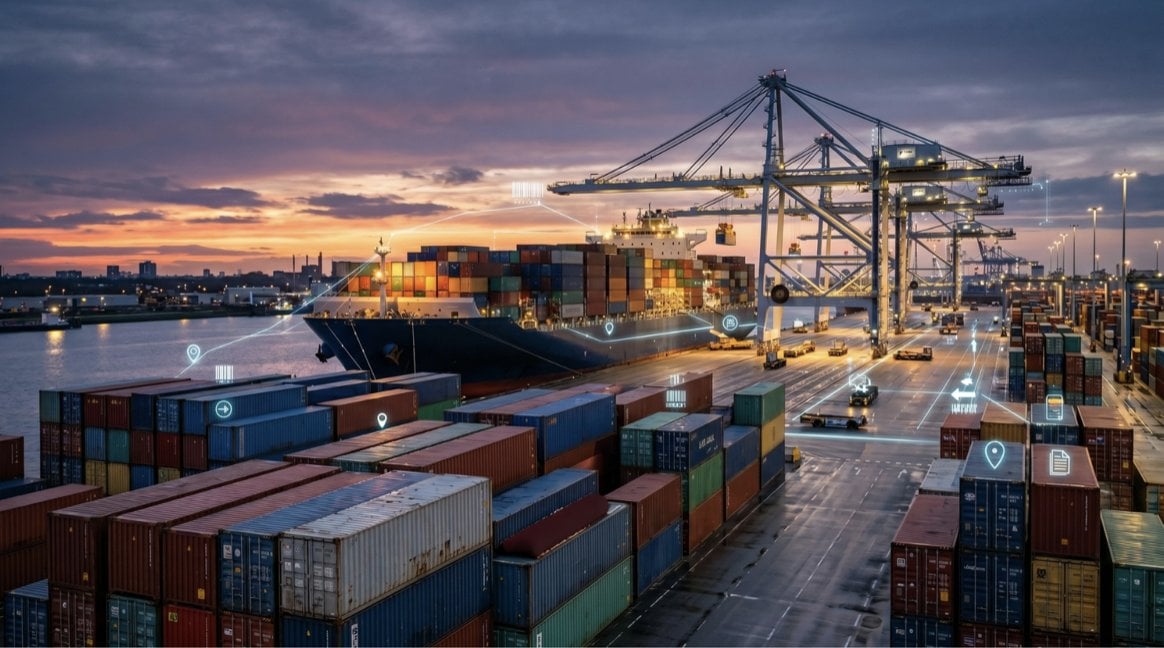
Digital logistics has solved visibility. The infrastructure layer of international shipping has changed dramatically in the last decade: real-time freight rates, live container tracking, instant booking across modes and carriers. A shipper in Istanbul can compare sea freight rates to Singapore, check vessel schedules, and confirm transit times in a few minutes using tools like SeaRates Logistics Explorer.
What digital logistics has not solved is legal deliverability.
Servers, network switches, data center components, telecom equipment: they still get stuck at customs in markets where the buyer has no legal presence. Projects stall. Penalty charges accumulate. And the problem has nothing to do with freight rates or tracking systems. It has to do with a missing legal layer: the importer of record.
Why Technology Shipments Are a Different Problem
Shipping enterprise IT equipment across borders is not the same as shipping consumer goods. Many markets require the importing entity to be locally registered, hold ministry-level authorizations, and assume full legal liability for customs declarations.
If a US company ships server hardware to a new market where it has no local subsidiary, it technically cannot be the legal importer. The shipment has no legal home. A freight forwarder can handle the physical movement and paperwork preparation, but they cannot assume import liability. That is a different function entirely.
Before planning the freight leg, shippers should also map total landed cost: duties, VAT, and applicable import levies vary significantly by market and product category.
SeaRates Logistics Explorer helps estimate freight costs across routes and modes. Compliance costs require a separate assessment.
What an Importer of Record Actually Does
A global importer of record acts as the legal entity of import in markets where the shipper has no local presence. The IOR's name appears on the customs declaration. They are accountable to the customs authority for compliance. That accountability is the service.
This is not a documentation shortcut. The IOR assumes genuine legal responsibility: duty payments, regulatory filings, product authorization where required, and post-clearance record-keeping. When a customs authority has a question, they ask the IOR.
For logistics teams managing multi-market hardware deployments, this changes the operational model. Instead of establishing legal entities in each target country before a project can proceed, the shipper engages an IOR with verified coverage in those markets, ships the equipment, and receives it cleared on the other side.
Where Generic IOR Coverage Falls Short
Not all markets process technology imports the same way. In many jurisdictions, wireless equipment, refurbished hardware, telecom devices, and high-value IT components may trigger product registration, type approval, conformity assessment, or importer authorization requirements beyond standard customs clearance.
These requirements are not visible in freight calculators. They are not listed on rate comparison platforms. They come from direct experience clearing those product categories through those specific authorities.
This is where IOR provider claims deserve scrutiny. A company listing 100+ countries on its website is often working through undisclosed local agents with no formal accountability structure. The practical question is not how many countries appear on a map. It is how many markets the provider has cleared regulated technology goods through in the past year, and whether they can name the regulatory body they engaged.
Shippers can use SeaRates Distance & Time to calculate port-to-port routing and transit estimates. Regulatory lead times in complex markets are separate, and often longer.
The Real Cost of a Failed Clearance
Container tracking tools show where cargo is at any moment. They cannot show whether import documentation is compliant before the goods arrive. That determination has to be made before the shipment moves, not after it clears the origin port.
Experienced importers build this into procurement timelines. Pre-qualification of the IOR, submission of product documentation, and confirmation of the regulatory pathway typically need to happen three to four weeks before cargo ships.
What Capable IOR Execution Looks Like
Clearing a straightforward server shipment into Germany is not a meaningful test. The test is regulated telecom hardware into a market with strict conformity requirements, on a compressed schedule, for a client who has never imported there before.
Capable IOR providers maintain documented relationships with local brokers and clearing agents, disclose those partners to clients on request, and carry formal authorization from customs authorities or relevant ministries in each active market. When a problem arises, there is a named person accountable for it.
How IOR Fits the Modern Logistics Stack
Providers with active, verified operations across 50+ markets can handle multi-country deployments without requiring the shipper to manage separate local relationships in each jurisdiction. That consolidation matters most for project-based deployments where timelines are fixed and delays are expensive.