

Long gone are the days when global logistics operated under the assumption that scale alone was enough. Are you investing in larger fleets, more vessels, and broader agent networks only? In 2026, that model has clearly shifted.
Meet the milestone that highlights control (over inland transport, real-time shipping data, last-mile execution, and regulatory exposure), not only capacity.
Let’s discover recent strategic moves by major players such as CMA CGM and Nippon Express, which illustrate this shift clearly.
CMA CGM and Freightliner UK: Why are ocean carriers investing in inland infrastructure?
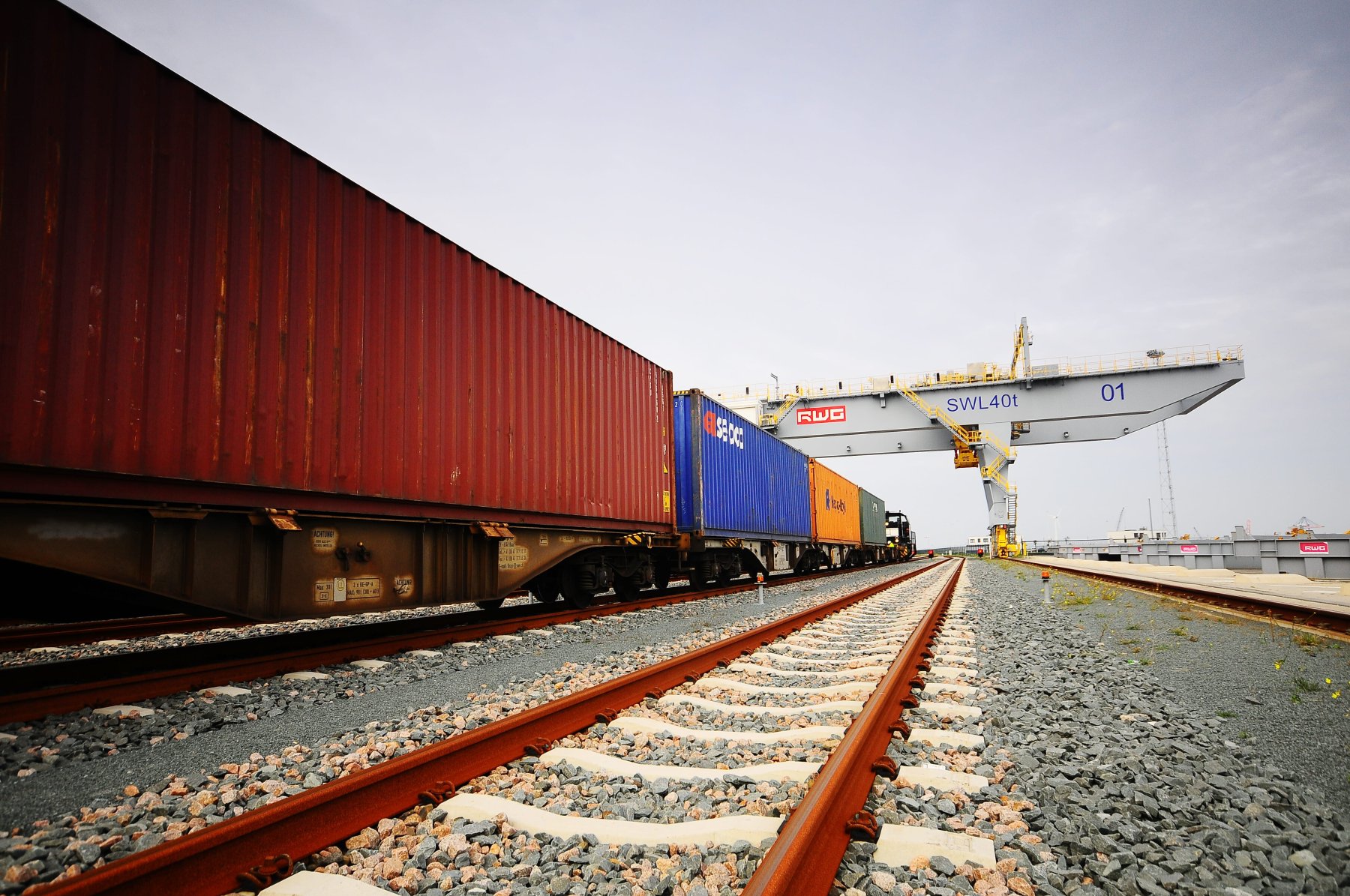
On February 3, 2026, CMA CGM completed its acquisition of Freightliner UK's multimodal business. This is a clear signal of how maritime carriers now view inland logistics: replacing the traditional focus on port-to-port transport, leaving rail, road transport, and terminal operations to third parties.
Currently, this separation is not working in the context of the sharp unpredictability of the international trade market.
By integrating rail and inland infrastructure into its network, CMA CGM gains several strategic advantages:
- Greater control over inland capacity during peak periods
- Reduced dependency on third-party rail operators
- Improved reliability for door-to-door contracts
- Stronger positioning in European multimodal corridors
This strategic decision is a positive solution for controlling internal infrastructure in conditions of congested ports, railway bottlenecks, and stricter environmental regulations. In this context, Europe is a field of competition, where inland transport has become no less important than maritime transport.
So, we catch the broader trend: ocean carriers no longer see themselves as transport providers only, but as infrastructure operators also.
Nippon Express: Strategic investments in Asia to build regional supply chain control
While CMA CGM focuses on strengthening its internal logistics in Europe, Nippon Express is expanding its presence in Asia through targeted investments in local logistics companies and regional hubs.
What is specific about this region? Logistical risks in Asia are related not so much to regulation as to fragmentation, capacity imbalances, and geopolitical uncertainty.
What are the dividends of Nippon Express' investment strategy?
- Secure, reliable last-mile and domestic distribution
- Build redundancy across multiple Asian corridors
- Reduce exposure to single-market disruptions
- Offer integrated solutions to multinational clients
Nippon Express management did not plan to use the existing networks of loosely connected logistics agents in the region. Instead, strictly controlled regional ecosystems are expected to be built to strengthen regional operations.
The end of fragmented logistics
There is a transition from major carriers to supply chain architecture, as both strategies above are signals of coordinating multiple modes under a single operational and contractual framework. This way, shippers and traders can benefit from fewer handovers, clearer accountability, and more predictable transit times, as well as simplified claims and dispute resolution.
Of course, such a market structure is possible, among other things, by addressing issues of competition and demand dependence — some of the most important problems for shippers.
On top of that, the two-year shutdown of trade routes in a critical corridor like the Suez Canal in the Red Sea highlights the limitations of traditional port-to-port logistics models. When carriers strive to maintain resilience, they already rely on alternative inland corridors, regional hubs, and multimodal flexibility.
Thus, decisions on accelerated consolidation in 2026 through control of rail networks, terminals, and inland infrastructure are necessary for operational efficiency, compensation for multiple delays, and uninterrupted logistics services.
What logistics consolidation means for shippers and traders in 2026
Trade businesses of various sizes should consider both the significant advantages and compromises that may arise when consolidating logistics in 2026.
Among the advantages are greater operational stability, better transparency among different modes of transport, and improved resilience during disruptions.
On the flip side, potential trade-offs include reduced carrier diversity in certain regions, greater price dependence on operators, and less flexibility for short-term changes.
Thus, we emphasize that greater stability when working with a large integrated supplier mostly comes at the expense of an individual approach. On the other hand, less independent exporters (although they will remain more flexible) may be unable to cope with congestion at regional hubs and transport links.
To sum up
Skip the idea of buying volume and go ahead with achieving resilience and control over supply chains. As for real-world examples, international freight parties are investing in regional control, infrastructure, and real-time data management. The last is not the least, as your continuous awareness about supplies, fleets, cargo movements, or shipment updates in live mode is essential in the current world of unstable routes, tightening regulations, and volatile demand.
Your logistics is a strategy that consists of consolidated resources and profit-oriented solutions for shipping and trade.
Let us know at [email protected] about your intention to ship and trade with confidence, predictive profit, and resilience.