
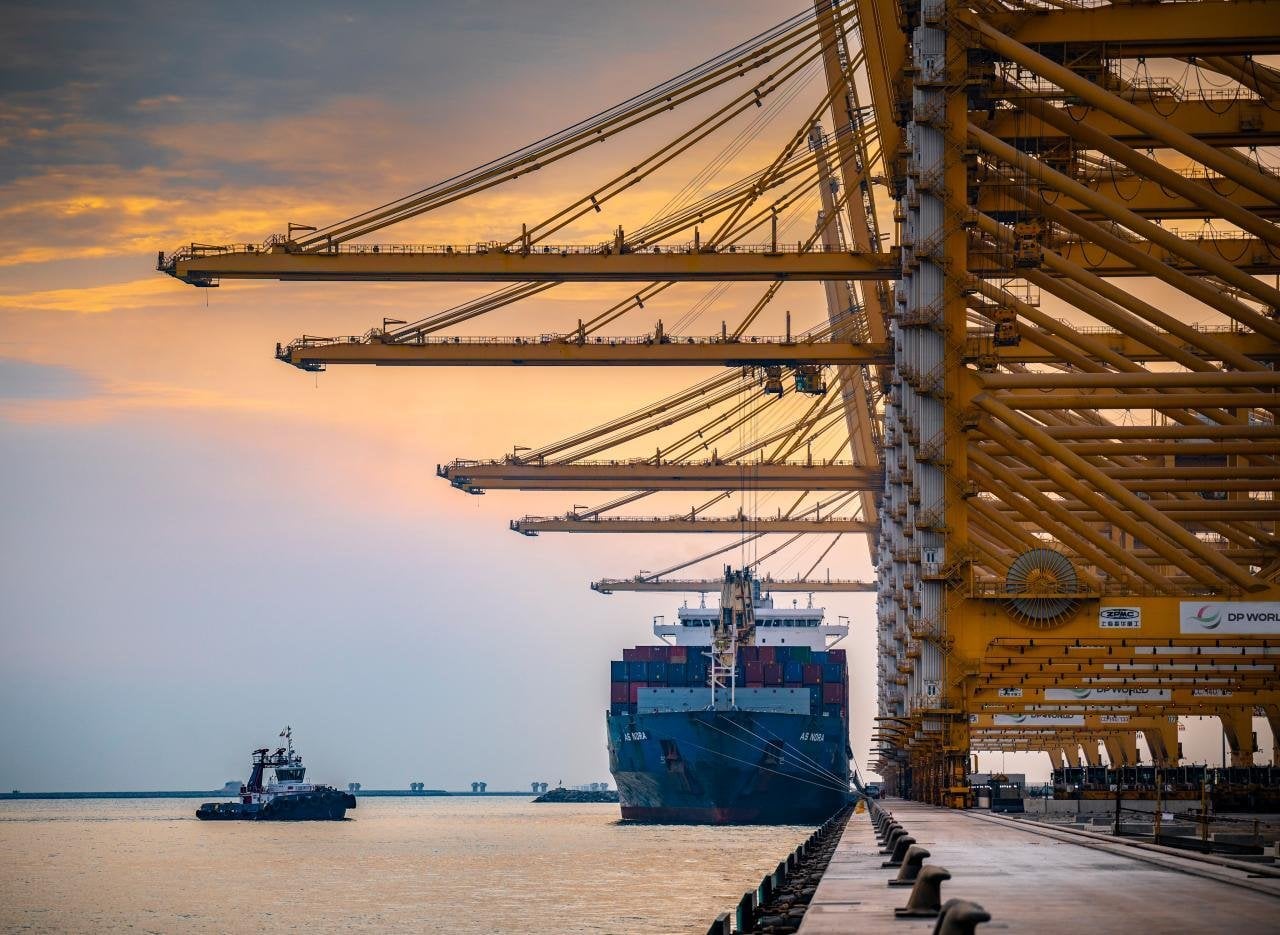
Major shipping lines are no longer treating Strait of Hormuz disruptions as a short-term problem anymore, and the change is arriving sooner than a lot of operators were expecting.
Rather than wait for calm in the Gulf, carriers are starting to adjust timetables now, redo their routing options, and also trial more adaptable logistics strategies around the region.
Recent reports highlighted companies like MSC, Maersk, and CMA CGM are looking at partial workarounds so they can cut back on how much risk sits on their operations in the Strait of Hormuz while still moving cargo from the Gulf toward Asia and on to Europe.
Fixed Gulf routing is starting to break down
For years, Gulf shipping ran on predictable rhythms, fixed port rotations, steady transit windows, and standardized vessel loops through the Strait of Hormuz. But that whole pattern is getting harder to keep up with; it’s starting to slip.
Instead of relying entirely on direct Gulf routing, carriers are increasingly shifting toward the following:
- selective port calls,
- shorter exposure windows inside Gulf waters,
- flexible departure timing,
- inland cargo repositioning,
- and dynamic voyage planning based on daily risk conditions.
Routing decisions that used to be standardized are now being tuned, more and more, on a ship-by-ship voyage basis. The outcome is a Gulf shipping market where flexibility is starting to replace predictability as the main way of operating.
For freight forwarders and logistics teams, even small routing changes can suddenly throw off entire delivery chains. The largest challenge is no longer just whether cargo can move through Hormuz, but instead whether ship schedules and freight charges can stay predictable enough to keep stable supply chains functioning.
How Strait of Hormuz risk could change Gulf shipping routes
The operational shift becomes clearer when Gulf shipping routes that are standard are lined up against the alternative scenarios carriers are now prepping for. Container cargo from Dubai to Singapore normally moves through the Strait of Hormuz and then across the Indian Ocean in about 10–14 days, give or take, depending on the carrier timetable and the transshipment links in place.
But now, even tiny routing tweaks or delayed Gulf departures can ripple into transit planning, feeder coordination, and downstream delivery windows across Asia-bound supply chains.
| Cargo Flow | Standard Route | Emerging Alternative | Possible Logistics Impact |
| Jebel Ali → Singapore | Direct Hormuz transit | Delayed departure windows | Longer transit planning |
| Qatar LNG → Karachi | Standard LNG corridor | Security-controlled vessel movement | Higher insurance costs |
| UAE exports → Europe | Direct Gulf loading | Inland transfer + secondary hubs | Additional handling and coordination |
| Gulf → Asia container services | Fixed weekly loops | Selective port rotations | Lower schedule reliability |
Transit distances, alternative shipping routes, and estimated transit times can be compared using the SeaRates Distance & Time.
How is the LNG traffic market moving?
Despite growing security pressure in the Gulf, shipping activity through the Strait of Hormuz has not stopped — but it is becoming far more controlled.
Reuters recently reported that Qatari LNG carriers continued to move through Hormuz toward Pakistan under controlled operating conditions, indicating that carriers are still willing to transit the corridor when risk exposure can be managed.
But operators are clearly changing how they move cargo.
Shipping companies are increasingly applying the following:
- tighter voyage approvals,
- dynamic rerouting,
- and more flexible scheduling for Gulf-bound services.
This is especially important for:
- LNG shipping,
- petrochemical exports,
- container cargo,
- and time-sensitive regional trade.
In practice, Gulf logistics is becoming scenario-based rather than schedule-based.
Importance for shippers, carriers, and logistics providers
For freight forwarders, the biggest threat is not necessarily a full closure of Hormuz. It is operational unpredictability.
A skipped Gulf port call or delayed vessel rotation can quickly affect container availability, transshipment connections, inland trucking schedules, warehouse capacity, and final delivery planning across multiple markets. That is motivating logistics teams to work with multiple routing scenarios instead of fixed assumptions.
A shipper moving cargo from Jebel Ali to Southeast Asia may now need to compare multiple routing scenarios in parallel — especially if vessel schedules, Gulf port rotations, or transshipment windows change with little notice. That often means:
- Recalculating transit times
- Monitoring updated vessel schedules
- Estimating freight exposure if carriers reduce Gulf calls
This is where freight planning tools stop being optional and become part of day-to-day operational decision-making. For example, online freight calculators allow shippers and freight forwarders to compare live market tariffs across several routing options and react faster to changing Gulf conditions.
Gulf logistics is becoming adaptive by default
The most important shift may not be whether the Strait of Hormuz closes at all. It is the fact that Gulf logistics networks are already adapting before a full disruption happens.
Carriers are quietly moving away from rigid route planning toward more flexible operational models built around selective routing, multimodal backup planning, dynamic scheduling, and real-time decision-making.
That transition is happening faster than many expected. The industry is no longer planning around stable routes, as it’s planning around uncertainty itself. So, that shift is already reshaping how Gulf logistics operates.
To discuss routing alternatives, transit planning, or cargo visibility solutions, contact the SeaRates team at [email protected].