
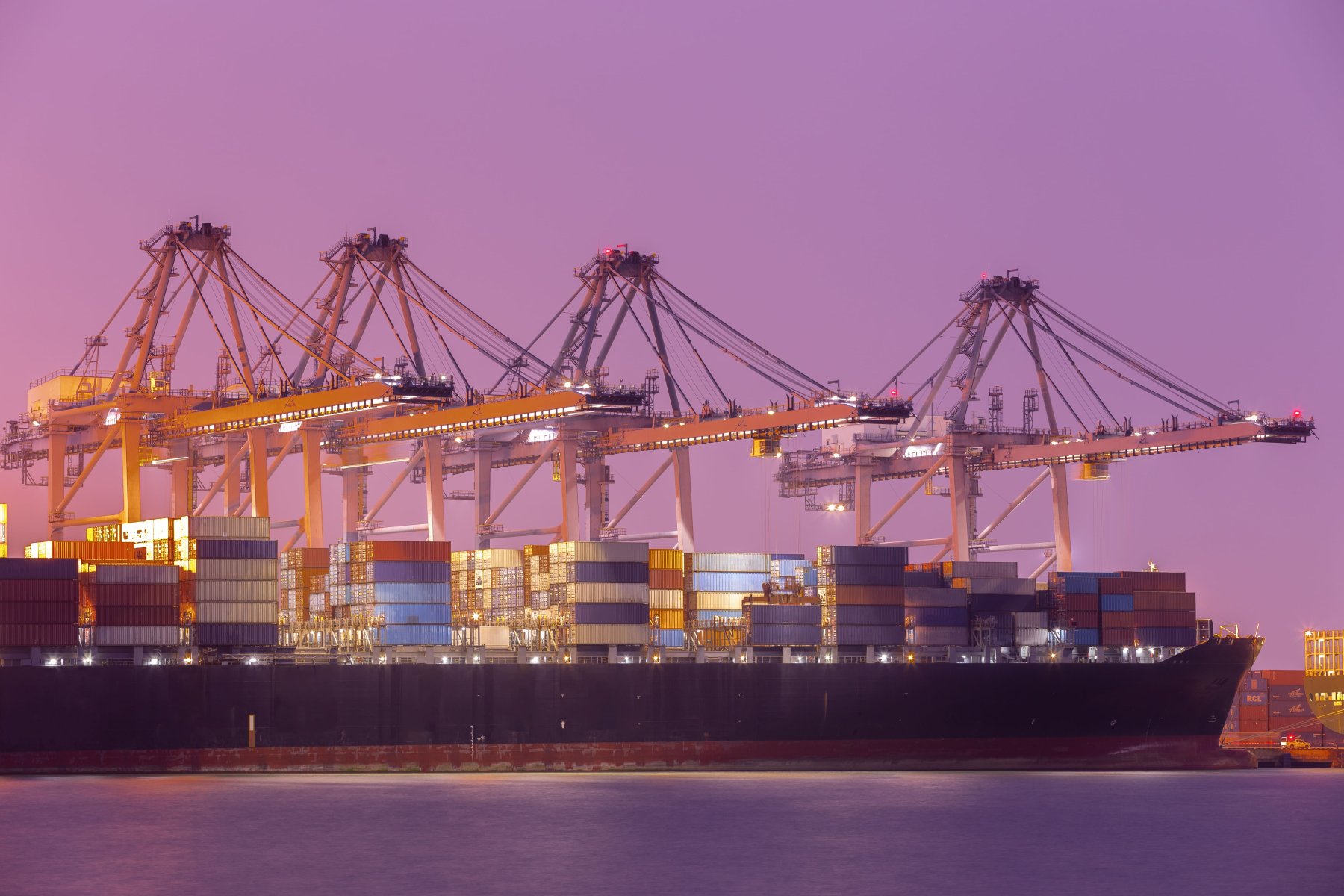
The EU’s latest trade agreements with Australia and Mercosur mark a structural shift in global trade flows. Our review discovered that Europe is building parallel corridors with both markets, each with different cargo profiles, routing patterns, and logistics requirements.
EU–Australia Trade Agreement
The trade agreement between the EU and Australia, concluded on March 24, 2026, provides for near-complete tariff liberalization between the two markets.
Securing access to key resources such as lithium, nickel, and rare earth is a major aspect of the agreement. These resources are key to energy transition sectors such as battery manufacturing and electric mobility.
From a trade structure perspective, the agreement supports long-term supply contracts and stable, resource-driven flows, as well as increased EU exports of machinery and industrial goods.
Operational impact
In practice, these flows are already shaping long-term procurement and logistics planning rather than day-to-day operations:
- strengthening of the EU–Australia long-haul trade lane
- increased demand for bulk shipping (minerals, ores)
- reliance on extended routes with higher sensitivity to rerouting (e.g., Suez vs Cape of Good Hope)
Shipments are larger, less frequent, and significantly more exposed to routing decisions — particularly on extended routes where deviations can add 10–15 days to transit time.
The key challenge is to plan a stable supply chain when routes, fuel costs, and transit times are highly variable.
EU–Mercosur Trade Agreement
The agreement between the EU and Mercosur, signed in January 2026, will provisionally apply in May. It will introduce reduced tariffs on numerous goods that are part of its plan to gradually phase out tariffs and the system of export restrictions on goods.
The Agreement establishes export pathways for agricultural products and raw material resources from Mercosur countries, including Brazil, Argentina, Uruguay, and Paraguay, to the European Union. Related to meat products, grain, and ethanol exports. The goal is to enhance EU industrial export access, especially for the machinery, vehicles, and chemicals industries.
However, unlike the EU-Australia deal, this agreement is built around high-volume trade, frequent shipments, and price-sensitive products.
Operational impact:
- expansion of Atlantic shipping routes
- strong demand for reefer containers and cold chain logistics
- relatively stable transit times compared to long-haul routes
Higher volumes and regular supplies mean more bookings, more port rotations, and tighter delivery expectations — especially for perishable goods.
The focus shifts from planning to execution:
How to handle growing shipment frequency, maintain schedule reliability, and keep costs under control across competitive Atlantic routes?
EU–Australia vs. EU–Mercosur: Deals comparison (2026)
What are the critical differences that matter for logistics and trade operations?
| Parameter | EU–Australia | EU–Mercosur |
| Status | Finalized (March 2026) | Signed Jan 2026, provisional launch in May 2026 |
| Tariffs | ~almost all tariffs removed on both sides | ~91% tariffs on EU exports removed (phased) |
| Agriculture access | EU exports (wine, dairy, processed food) → tariffs removed; quotas for AU meat | Mercosur exports (beef, poultry, sugar) → quotas + gradual liberalization |
| Key imports to the EU | Critical minerals (lithium, rare earths), energy resources | Agriculture (meat, grain, ethanol), raw materials |
| Industrial exports from the EU | Cars, machinery, processed goods (improved access) | Cars, machinery, chemicals (tariff cuts up to ~20–35%) |
| Trade structure | Strategic, resource-driven, long-term supply chains | High-volume, regular cargo flow (agri + raw materials) |
| Geopolitical driver | Reduce dependency on China, secure critical minerals | Diversification of supply chains and trade partners |
| Trade impact expectation | Expected to significantly increase trade volumes and economic output | One of the EU’s largest trade agreements, Covering a combined EU-Mercosur market of ~780M people, substantial tariff savings expected |
Interpretation:
The EU–Australia agreement is primarily strategic, as it’s focused on securing essential resources and establishing regular supply networks. As for the EU–Mercosur agreement, it allows for extensive agricultural trade and consistent trade operations through its volume-based framework.
Operational differences between deals become visible at the level of actual shipping routes, where trade flows are concentrated and executed.
Key shipping routes
The impact of the EU–Australia and EU–Mercosur agreements is reflected in a set of established trade lanes that are expected to scale in volume and strategic importance:
For EU–Mercosur, flows are concentrated along relatively stable Atlantic routes:
- Santos → Rotterdam / Antwerp (agriculture bulk + reefer containers)
- Buenos Aires → Hamburg (food exports)
In contrast, EU–Australia trade relies on long-haul ones:
- Melbourne → Hamburg / Rotterdam (bulk + standard container)
- Sydney → Northern Europe (long-haul container routes)
Routing variability remains a factor:
- EU–Australia routes are sensitive to Suez vs Cape of Good Hope routing decisions
- EU–Mercosur routes rely on relatively stable Atlantic corridors
Both agreements redefine how cargo moves across regions. So, let’s break down the actual trade flows by cargo type and transport mode.
Trade flow structure
Highlighted asymmetry caused by Australia’s trade flows, which consist mainly of raw materials and are contract-based, whereas those of Mercosur are volume-driven and regular in nature.
| Route | Cargo type | Mode | Shipment pattern |
| EU → Australia | Machinery | Standard Container | Low-frequency |
| Australia → EU | Lithium | Bulk | Large-volume |
| Mercosur → EU | Meat, grain | Reefer/Bulk | High-frequency |
| EU → Mercosur | Machinery | Standard Container | Regular |
In addition, these routes differ in load balance:
On EU–Australia routes, there is often a shortage of return cargo, leading to the transport of empty containers, whereas on EU–Mercosur routes, there is a more stable two-way flow of containers.
This directly affects freight pricing and capacity utilization.
Freight rates overview: March 2026 actual updates
Freight rates vary depending on the carrier's service offer, seasonality, and capacity availability.
EU → Australia tariffs
| Rotterdam, NL → Sydney, AU | From $2,000 | Check tariffs |
| Antwerpen, BE → Darwin, AU | From $2,000 | Check tariffs |
| Barcelona, ES → Melbourne, AU | From $800 | Check tariffs |
| Marseille, FR → Brisbane, AU | From $2,000 | Check tariffs |
Australia → EU tariffs
| Bell Bay, AU → Genova, IT | From $2,000 | Check tariffs |
| Melbourne, AU → Hamburg, DE | From $3,400 | Check tariffs |
| Melbourne, AU → Bremen, DE | From $2,900 | Check tariffs |
| Brisbane, AU → Thessaloniki, GR | From $2,000 | Check tariffs |
EU → Mercosur tariffs
| Leixoes, PT → Santos, BR | From $1,200 | Check tariffs |
| Zeebgrugge, BE → Buenos Aires, AR | From $1,900 | Check tariffs |
| Burgos, ES → Buenos Aires, AR | From $2,400 | Check tariffs |
| Antwerpen, BE → Montevideo, UY | From $2,000 | Check tariffs |
Mercosur → EU tariffs
| Santos, BR → Lisboa, PT | From $2,400 | Check tariffs |
| Santos, BR → Algeciras, ES | From $1,500 | Check tariffs |
| Buenos Aires, AR → Amsterdam, NL | From $2,200 | Check tariffs |
| Montevideo, UY → Antwerpen, BE | From $2,000 | Check tariffs |
Notes:
- EU–Mercosur routes remain cost-efficient and stable
- EU–Australia routes show higher cost and volatility due to distance and rerouting risk
Transit time variability
| Trade route | Avg. delivery time (via Suez Canal) | Safe mode (bypassing via Cape of the Good Hope) |
| Rotterdam, NL → Melbourne, AU | 33 days | 60 days |
| Gdynia, PL → Brisbane, AU | 37 days | 70 days |
| Genoa, IT → Sydney, AU | 29 days | 36 days |
| Marseille, FR → Santos, BR | 15-33 days | — |
| Lisbon, PT → Montevideo, UY | 15-33 days | — |
| Bremerhaven, DE → Buenos Aires, AR | 19-30 days | — |
Source: SeaRates Distance & Time Calculator
These agreements are affecting both markets and shaping the global logistics with the trend of more fragmented and specialized shipments, from long-haul flows to high-frequency shipments. Operational complexity increased because of greater pressure on routing decisions, cost control, and shipment visibility.
We at SeaRates support you with these logistics needs. Let us know at [email protected] to secure your supplies and maintain delivery timelines perfectly.