

The lack of accurate freight rate data leads to chaos when planning shipments. It is impossible to achieve efficient trade without transparent pricing of delivery services.
Moreover, due to constant changes in the logistics market, managing freight rates is becoming an increasingly important aspect for 3PLs, as shippers require them to do so.
In this article, we'll take a look at why a freight rate calculator is an integral part of successful logistics management and how it can help reduce costs and increase efficiency.
Old-way rate management concerns
Do you remember what searching for freight rates for sea, land, and air transportation used to feel like?
- Rates searching across multiple shipping lines and carrier websites in the hope of accurate data and wasting time on fragmented information or a lack of data;
- The impossibility of personalized search for different types and delivery modes, lack of container consolidation;
- Support is limited to parcels on e-commerce websites and freight shipments sourced from separate providers;
- Manual search is time-consuming, prone to numerous account errors, and cannot compare offers from different carriers in one place.
The standard methods are deeply outdated due to manual information updating. However, it's fine if a shipper needs to ship a single 20-foot container by sea or a parcel by air from point A to point B — then you can go to the first website you come across and check the freight price. Meanwhile, what should you do to manage your logistics and set up your supply chain efficiently?
Shippers and carriers can no longer spend hours searching for freight rates inefficiently. Your customers will stop calling you for freight rates for their shipments and opt for an advanced online freight rate calculator.

Critical conditions you need to address
The supply chain is facing an uncertain time with rising costs. Shippers face many challenges when planning shipments during the volatile summer of 2025. When choosing a carrier or freight forwarder, there is a growing list of requirements, and it will not be possible to limit oneself to promises of fast delivery. Below are current challenges for traders and supply chain planners that logistics providers should address:
Global container shortage and rate fluctuations
Congestion in world ports has increased by 300% and is one of the reasons for the shortage, with delays potentially reaching two weeks. This has led to a 30-50% increase in the cost of short-term container rental.

Risk of sudden expenses
Container rental costs fluctuate on different routes due to congestion or geopolitical tensions in different global regions. It is crucial for shippers to access clear analytics and real-time freight rates in a transparent and timely manner. To avoid an unexpected 40% increase in the transportation budget, it is necessary to provide customers with a freight calculator that immediately accounts for the current changes without surprises.
Re-routing and unstable supplies
Even minor factors can compel shipping lines or carriers to alter their routes to longer ones. For example, alternative delivery routes to the Suez Canal, such as bypassing Africa around the Cape of Good Hope, increased transportation costs by 40-50%. In addition, containerized shipping from Singapore to Rotterdam has risen in price by 115% due to re-routing.
Currently, the issue of re-routing for shipping is relevant for transportation through the Strait of Hormuz.
Therefore, we experience not only an increase in transportation costs but also delays at ports, which lead to higher storage costs.
Need to adapt the supply chain
Changes in customs tariffs can pose a logistical challenge for an unprepared supply planner, as demonstrated by Trump's tariff war.
Using the convenient tool for shipping cost calculation, you can access current market offers, compare them, adjust your delivery strategy by changing the type of transportation or route, and obtain new cost options.
What do shippers ask from carriers and freight forwarders?
- Transportation costs visibility: It's no longer just a technical function — it's about trust when your customer can calculate shipping services according to their specific needs and get a detailed rate breakdown.
- Convenience for long-term cooperation: The more convenient it is to work with you, the more willing customers are to continue using your services. Do you provide an option for customers to calculate transportation costs and book shipments directly on your website? If so, your customers will be with you for a long time.
- Are you reliable? This question is as important as “How fast will you deliver my cargo?”. Ensuring the cargo owner's peace of mind requires clear reporting and transparent shipment tracking.
This is the time to frankly answer whether I provide a service of such a level that my customers can conveniently and easily obtain freight data on my website.

Key parameters for choosing the type of delivery
| Parameter | Sea freight | Road & rail freight | Air freight |
| Shipping type | Containerized cargo, large consignments | Small or medium-sized cargo, fast delivery | Packages, fast delivery |
| Freight costs | Lowest for large consignments, depends on routes | Average cost depends on distance and cargo capacity | The most expensive option, but the fastest |
| Extra services | Storage, customs clearance, etc. | Insurance, tariffs for large cargoes | Insurance, extra fee for urgency |
| Market’s impact on costs | Price fluctuations, changes in customs tariffs | Fuel price fluctuations | Cost fluctuations due to seasonality and demand |

Freight Calculator to improve your logistics services
What does the advanced freight rate calculator do for logistics businesses?
- Compare offers — the cost of sea, air, and land transportation; different routes; transit time; extra services; and other carrier conditions. Find the most appropriate and flexible terms for your shipment;
- Monitor changes in shipping costs according to updates from carriers to calculate how much your shipments will cost;
- Instantly book a rate to guarantee the prices and cargo space at the current moment;
- Plan logistics ahead with confidence and proper calculations.
This is how you can find a range of freight rates just by specifying the route points and details of the transportation method:
As a freight service provider, you can integrate the web version of the Logistics Explorer and sell your white-label tool for tariff calculation, promote your rates, or resell your partners’ tariffs right on your website:
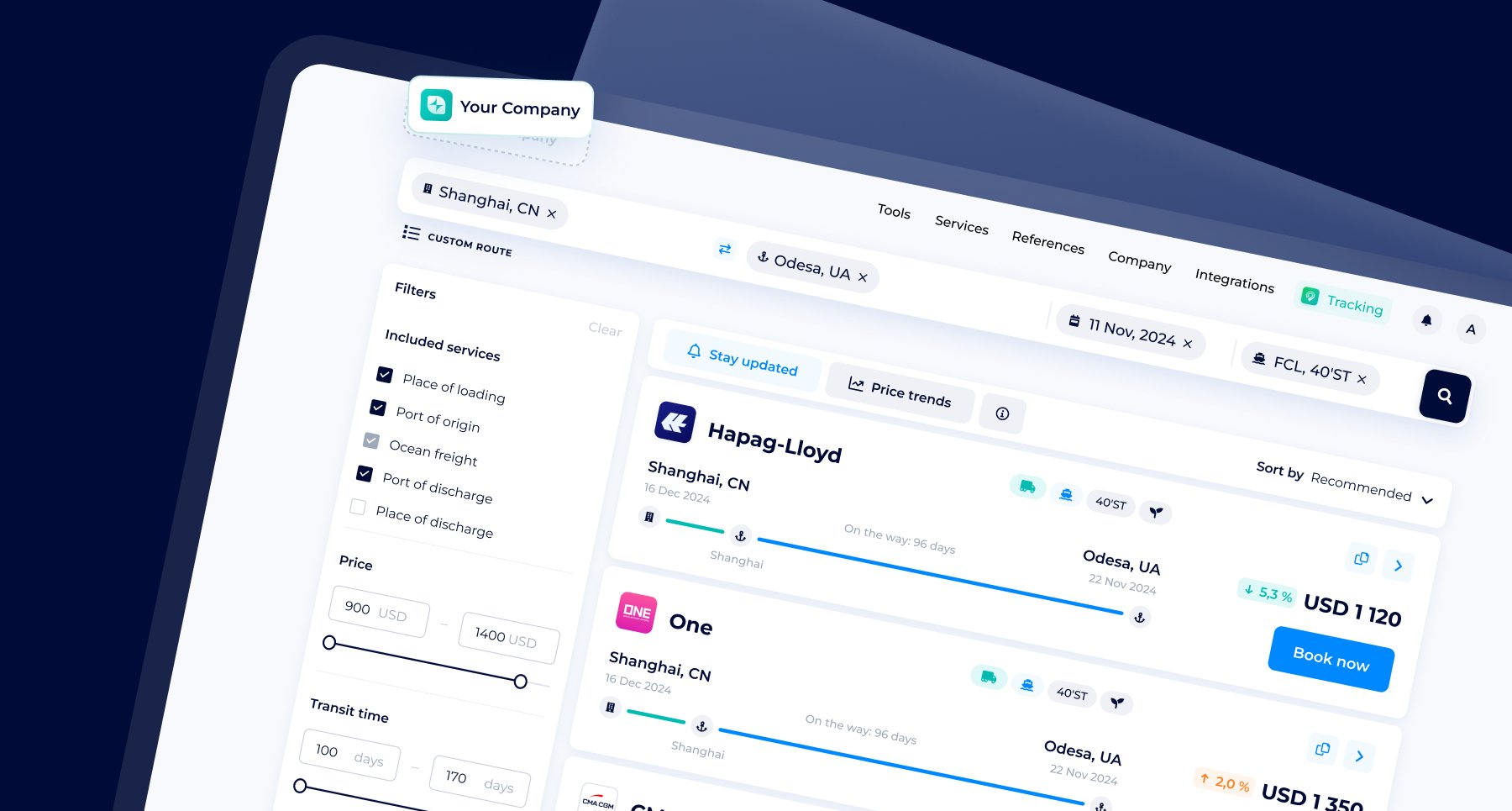
Also, connect to the API to sync your freight rates. Sell tariffs by integrating the entire functionality and creating your own Logistics Explorer:
Read the guide “How to Use Logistics Explorer? Freight Calculator to Find & Promote Rates”, intended for shippers' and logistics providers' needs. Know how to calculate freight rates for any transportation type, as well as how to sell rates & generate shipping leads.
Striving for comprehensive control of supplies and transportation budget to avoid hidden costs and delays? It’s time for digital tools for shipping management. Contact us at [email protected] for tailored logistics solutions.