
Do you have complete visibility of your logistics, or just “trendy noise”? If you are getting real profit from end-to-end transparency of your supply chain processes, you are on the right track.
Find out how to turn logistics visibility into a business asset instead of being left with outdated data.
Visibility of logistics processes as an asset
Answer the question, “How do you benefit from process transparency?” Visibility only “pays” if it converts into operational and, therefore, financial advantages. Otherwise, it is data for data's sake, with no practical value to the business, but only costs.
Let's compare how useful data differs from the opposite:
| Concept | What is it? | Example | Role in the supply chain | |
| Raw data | Unfiltered information | Delivery time, number of units shipped, and inventory levels | Raw material for analysis, but without context or interpretation | |
| Data | Collected, processed, but not yet interpreted information | Real-time inventory information, location of goods | Key element for further analysis and decision-making | |
| Visibility | Systems and processes that provide access to real-time data and ensure its review | Platforms for real-time cargo monitoring that provide a complete picture of the supply chain | The ability to see the whole picture of the supply chain, identify problems, and optimize processes | |
| Insights | Deep understanding that arises from data after it has been analyzed | “A lack of inventory in the warehouse will lead to production downtime, so supplies need to be increased quickly” | Decisions and recommendations based on data and visibility | |
| Visibility as an asset | Strategic use of visibility to optimize operations and achieve competitive advantage | Use real-time data to adjust production and logistics plans, reducing freight costs and downtime | An important asset for business, enabling competitive advantage and improved efficiency |
How to understand whether you have data or real visibility of processes?
Checklist: Do I own the data or visibility?
1. Access to real-time updates
- Data: Do you have access to actual data? It may be outdated or not entirely relevant.
- Visibility: Do you receive updated information and changes in real time? You can save time and money by responding quickly to changes such as delays, route changes, etc.
2. Analysis of collected data
- Data: Lots of diverse and uncoordinated information. You cannot quickly collect, analyze, and identify problems among arrays of unconsolidated data.
- Visibility: You have access to organized insights and reports at any time to make clear decisions.
3. Data on each stage of the supply chain
- Data: Fragmented information at certain stages instead of a complete picture.
- Visibility: All stages of the supply chain, with any concerns or changes, are at your fingertips, from customer order to successful delivery.
4. Monitoring current processes and forecasting future ones
- Data: You know the historical data, but not the current state of processes or predictions of difficulties.
- Visibility: Visual monitoring of processes now, data-backed forecasting of future operations, and vulnerability alerts. You can predict delays, changes in supply volumes, and demand trends to optimize logistics resources and budget.
5. Rapid response tools
- Data: It is impossible to process information quickly at any given moment.
- Visibility: Customized alerts from real-time tracking systems are set up for a faster response, allowing for immediate action.
6. User-friendly interfaces for viewing and analyzing data
- Data: It is difficult to interpret raw data presented in massive tables or other unstructured formats.
- Visibility: An interactive dashboard allows you to understand the situation in seconds, check key updates, and make decisions based on conveniently visualized information.
7. Transparency for all supply chain participants
- Data: Information is available only to you or another single participant in the operations.
- Visibility: Synchronized information and secure, controlled access for other participants in real time. This way, everyone can receive critical updates promptly and manage their own processes.
8. Timely detection of vulnerabilities and weak points in logistics
- Data: You receive data about events, but you cannot immediately see where there may be problems or delays.
- Visibility: You can see potential difficulties or bottlenecks in the supply chain based on real-time data and take action before serious consequences arise.
9. Proactive decisions based on real data
- Data: You can only react to current results and consequences of issues, but you cannot predict them in advance.
- Visibility: You can make proactive decisions based on data analysis. This allows you to anticipate potential vulnerabilities and risks before they arise.
10. Close cooperation and data transfer between supply chain participants
- Data: Lack of information exchange leads to isolation — operations are not synchronized with each other.
- Visibility: Availability of a single database or dashboard to coordinate the interaction of all logistics participants.
From supplier to consumer: What are your visibility benefits?
Suppliers
The demand-driven production model: real-time data allows the supply chain to be transformed into a “production sensor,” where each shipment becomes a signal about the market, rather than just another action. As a result, suppliers have less frozen capital in inventory and can more quickly adjust production plans to address supply delays and other changes.
Manufacturers
Real-time supply updates: Demand forecasting and optimization, as well as financial benefits from reduced costs.
Shippers
Transportation cost optimization: Visibility allows shippers to compare and select the best routes and carrier offers. In addition, transit time control and predictive analytics with arrival data warn of delays.
Freight forwarders
Improved management from A to Z: Coordination of cargo between different routes and modes of transport and optimization of stocks thanks to accurate calculations without human error. In addition, a shared database for updates and collaboration between customs, suppliers, customers, and partners.
Carriers
- Route optimization: Change routes in real time to reduce fuel costs and travel time.
- Better transport monitoring: Real-time tracking of cargo and transport to improve efficiency.
- Reduced penalties: Avoid penalties for exceeding delivery times thanks to accurate monitoring.
- New sources of income: Monetization of cargo movement data, for example, through analytical reports.
Port operators
- Faster cargo handling: Improved visibility allows for better planning of cargo handling, reducing vessel downtime.
- Reduced infrastructure load: Better synchronization with other supply chain participants.
- Improved security: Improved control over the movement of goods, minimizing losses.
- Optimized warehousing: More efficient management of cargo storage space.
Distributors/Wholesalers
- Improved goods circulation: Accurate tracking of goods allows you to optimize the distribution of goods between warehouses and stores.
- Reduced storage costs: Accurate delivery planning reduces inventory levels.
- Increased customer loyalty: Ensuring timely delivery and accurate tracking of goods increases customer satisfaction.
- Improved interaction with suppliers: Shared access to data allows for a better understanding of retailers' needs and a timely response to changes.
Retailers
- Inventory control: Use data to optimize inventory levels and demand for goods.
- Fewer stock-outs: Accurate shipment tracking helps avoid shortages.
- Improved negotiating position: Data on delivery delays gives retailers leverage over suppliers.
Consignees
- Timely delivery: By changing the way orders are processed, consignees can better plan for the receipt of goods.
- Quality control: Real-time data allows you to track the status of cargo at all stages of transportation.
- Increased customer loyalty: Accurate and timely delivery improves the consignee's reputation.
- Risk management: Visibility reduces the risk of damage or loss of goods.
End consumers
- Real-time tracking builds trust in the brand, reducing transaction costs for B2B and turning “waiting time” into “planning time” for B2C.
- Fewer last-mile failures, time savings, and more repeat purchases thanks to convenience.
Unified Tracking solution: Proactive visibility for sea, air, rail, road, and parcel shipments
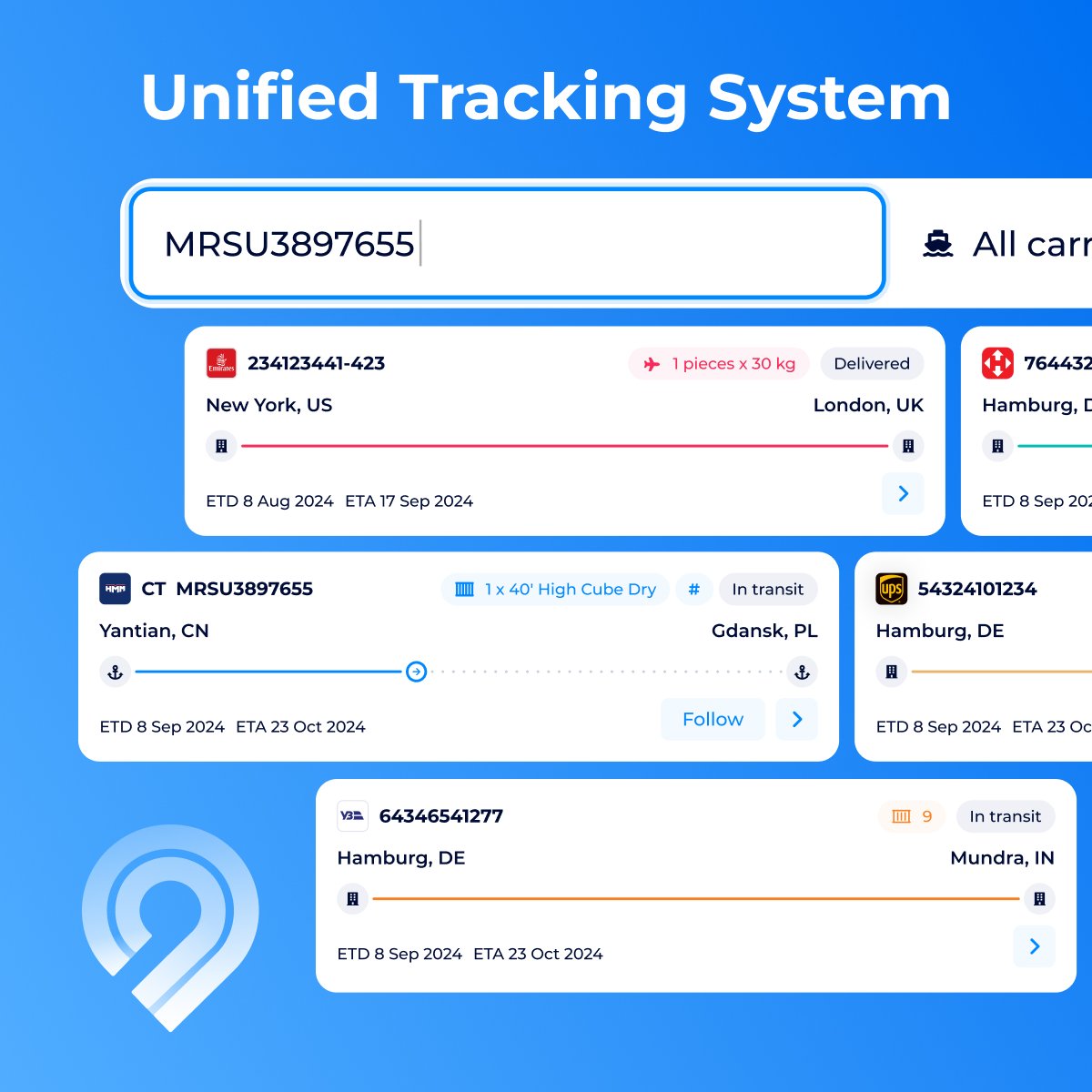
SeaRates Unified Tracking is designed for all types of freight and parcel tracing to ensure real-time updates, shipment changes, history, and immediate coverage of global shipping in one place:
🚢 Container Tracking
Get started with the SeaRates Unified Tracking — enter the container, bill of lading, booking number, airway bill, or equipment ID to access:
- Barrier-free tracking of 600+ carriers across the globe
- Details about routes, transit time, Predictive ETA & other logistics events, voyages, and more
- Potential delays in forecasting to predict the next step of your shipping
- Container management by region, route, and delivery status
- Updates on transshipments & routes in real time for perfect routing
- and much more with a single tool
Interested in an up-to-the-minute monitoring tool tailored to your requirements? You’re always welcome to contact the SeaRates team at [email protected] and get your free trial and live demo! We are expecting to assist you with your current shipping needs.