
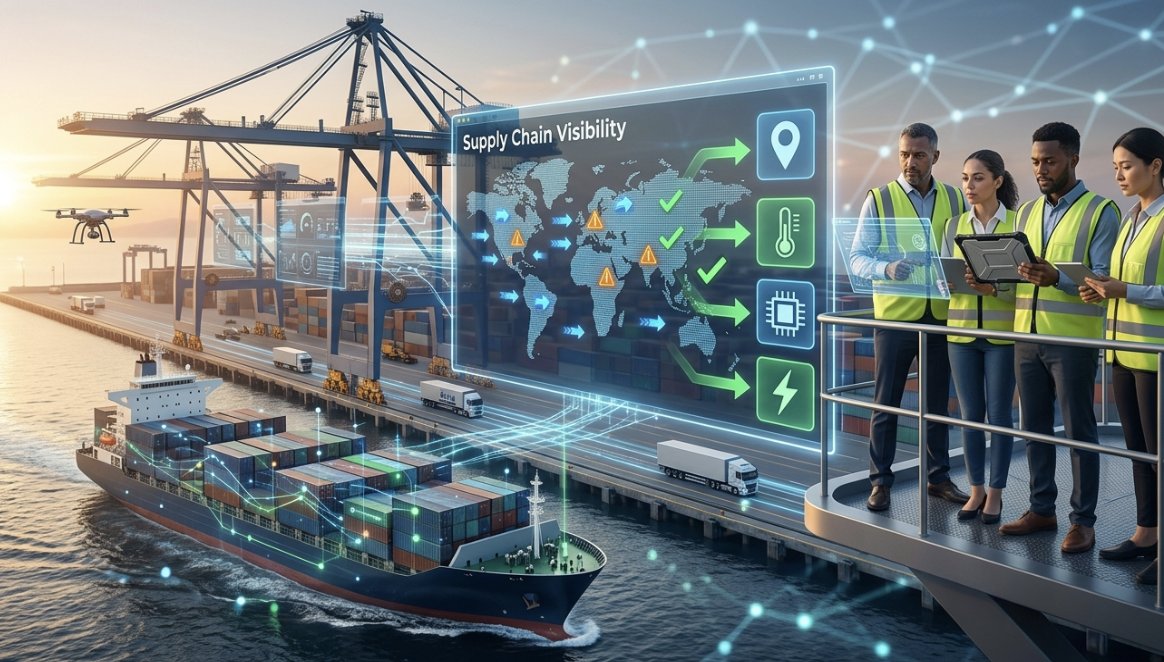
Imagine you are running a global business with high stakes. You have a massive shipment of sensitive electronics traveling from Shanghai to Los Angeles. In the traditional model, you’d wave goodbye to that container and essentially hope for the best. You might get a phone call if something went terribly wrong, but usually, you were in the dark until the ship actually docked at the port. This wait-and-see approach is exactly why so many companies struggle with out-of-stock items, wasted capital, and frustrated customers.
Today, the world moves far too fast for hope to be a viable business strategy. We are witnessing a massive, tech-driven shift in how products move across the ocean. The secret weapon in this revolution is real-time data. According to recent industry reports from Gartner, organizations that embrace real-time visibility are seeing a 20% reduction in lead times.
But there is a catch that many businesses miss: just seeing where your stuff is located isn't enough. If you see your ship is stuck in a storm or blocked by port congestion, but you don't have the workflows to do anything about it, that data is just noise. To win in the high-stakes world of international shipping, you have to move from visibility (noticing the problem) to action (executing the solution).
Understanding Real-Time Data in Logistics
When we talk about real-time data in a supply chain, we are referring to information that is transmitted and updated the very second an event occurs. It’s the difference between looking at a static photograph of a highway and watching a live, high-definition video feed of traffic flow.
In the complex world of shipping and global logistics, this includes a variety of data points:
- Live GPS locations of vessels, planes, and trucks across the globe.
- Instant inventory counts are synchronized across five different warehouses in three different time zones.
- Environmental sensors provide temperature, humidity, and shock readings inside a specific container.
- Live demand signals, such as sudden spikes in online orders on your retail website.
In the past, most companies operated on batch data. This meant they would receive a report at the end of the day or even the end of the week. But if a truck broke down on Tuesday morning and you didn't find out until Friday’s summary report, you’ve already lost three days of sales and customer trust. Real-time data removes that lag entirely. It gives you the power to react while the problem is still small and manageable.
Structural Problem with Old School Shipping
Traditional supply chains are often built like a game of telephone. The factory tells the shipper, the shipper tells the port authority, the port tells the trucking company, and the trucking company finally tells the retail store. By the time the message gets to the end of the line, it’s often distorted, wrong, or tragically late.
Data Silos: The Hidden Profit Killer
The biggest issue within these organizations is what we call data silos. This is a way of saying that the various departments in a company and the external partners they work with don't actually talk to each other. The sales team might be promising a major client that an item is in stock, while the warehouse team knows the shipment is actually stuck at customs due to a paperwork error.
Because these systems aren't connected, nobody has the full picture. This leads to the "Bullwhip Effect," where a tiny delay or a small change in customer demand at the start of the chain turns into a massive, expensive disaster by the time it reaches the end.
Sarah Eastwood, Marketing Manager at Dallas Gold Buyers, notes: “In the gold buying industry, real-time pricing and inventory alignment are critical. Without connected data, businesses risk overpaying or missing profitable opportunities.”
The Missing Link: Moving Toward Decisive Action
Have you ever looked at a weather app, seen that a heavy downpour is going to start in ten minutes, and then walked outside without an umbrella anyway? That is exactly what many companies do with their logistics data. They have the visibility, but they lack the internal infrastructure for action.
Why Companies Get Stuck in Observation Mode
- Information Overload: They have so much raw data coming in from sensors and trackers that they don't know which parts are actually important.
- No Clear Plan of Attack: They see a delay on a dashboard, but nobody in the company knows exactly who is responsible for fixing it or what the backup plan is.
- Slow Approval Chains: By the time a manager gives the okay to pay for a rerouted shipment or an alternative carrier, the window of opportunity has closed.
To fix this, you need a clear, digital path: Data → Insight → Decision → Action. You need tools that don't just show you blinking dots on a map, but actually tell you what those dots mean for your shipping costs and delivery timelines. This is where SeaRates IT tools come in, helping you bridge that gap between knowing and doing.
Where Does This Data Come From?
Modern logistics relies on a stack of technologies that work together to provide a seamless flow of information.
Smart Sensors and the IoT
IoT stands for the Internet of Things. In the shipping world, this means attaching small, smart sensors to containers, pallets, or even individual high-value items. These sensors are incredibly powerful; they can tell you if a container was dropped, if the door was opened in an unauthorized location, or if the expensive pharmaceuticals inside are getting too warm.

Hague University of Applied Sciences
Live Inventory and Warehouse Management
Modern warehouses use a mix of RFID tags, scanners, and even autonomous robots that update the master list the moment a single box is moved from a shelf. This means your e-commerce website always knows exactly how many units are available for sale, preventing the dreaded out-of-stock notification after a customer has already paid. Organizations like the Council of Supply Chain Management Professionals consistently highlight inventory accuracy as a top priority for improving cash flow.
Transportation Tracking and TMS
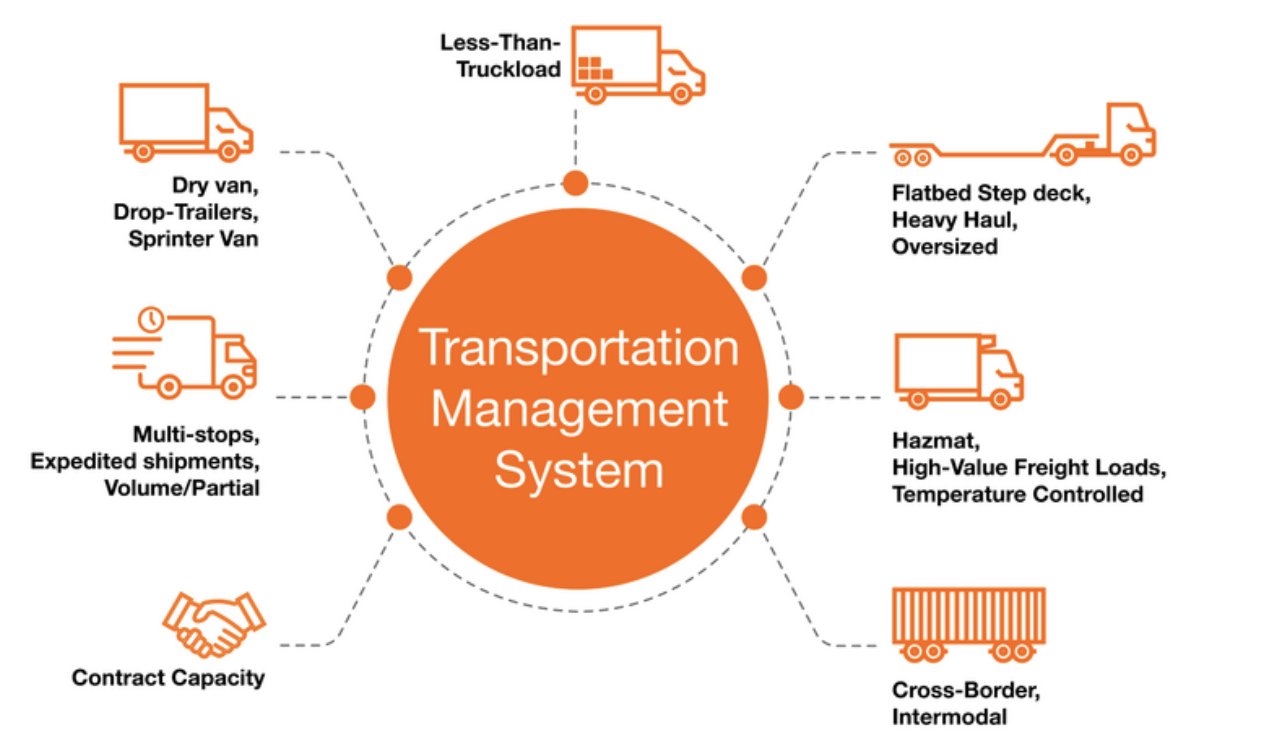
A Transportation Management System (TMS) tracks every vehicle in the fleet. By integrating these systems with SeaRates Logistics Tools, shippers can see port congestion levels in real-time. If you see that the Port of Long Beach is experiencing a 10-day backup, you can see it happening as it develops and decide to send your cargo to an alternative port like Oakland or Savannah instead.
Logan Peranavan, CEO of TapestoDigital UK, says, “IoT is not just about tracking, it’s about quality assurance. In the food and pharma sectors, real-time temperature data is the difference between a successful delivery and a total insurance claim.”
GW World
The Tangible Benefits of Going Real-Time
Removing Blind Spots
When you have end-to-end transparency, you aren't guessing anymore. You know exactly where your capital is tied up at all times. This builds massive trust with your business partners and your end customers, who no longer have to wonder where their orders are.
Drastic Savings on Storage and Holding Costs
When you know exactly when a shipment will arrive at the warehouse, you don't need to keep a massive safety stock of extra items just in case. This saves a huge amount of money on warehouse rent, insurance, and labor. This lean approach is the foundation of modern "Just-In-Time" logistics.
Elevating the Customer Experience
Today’s customers, both B2B and B2C, expect to know exactly where their package is. If there is a delay due to a storm or a strike, they are usually understanding—if you tell them immediately. Real-time data allows you to send those "Your package is running late" updates before the customer even thinks to reach out to support.
As Tal Holtzer, CEO of VPSServer, explains, “Real-time visibility doesn’t just improve operations, it changes how customers perceive your reliability. When people feel informed, they’re far more likely to stay loyal, even when things don’t go as planned.”
The Core Section: How to Turn Data into Action
This is the most important part of the journey. How do you stop just observing and start executing?
Centralize Your Information
You need what experts call a ‘Single Source of Truth.’ This means all your data from your trucks, your ocean carriers, and your warehouses needs to be in one place. If your team is jumping between ten different websites and apps to track one shipment, they are going to miss critical information.
Implement Automated Alerts
You shouldn't have to hire someone to stare at a screen all day. A sophisticated system will send you a text or an email only when something deviates from the plan. For example: "Alert: Container #402 is 5 degrees above the safety threshold." This allows your team to focus on high-value work until they are actually needed to solve a problem.
Leverage Predictive Analytics
This sounds like science fiction, but it’s the current reality for top-tier shippers. By looking at years of historical data combined with live feeds, AI can predict when a port is likely to get crowded or when a certain delivery route is likely to be blocked by weather. This allows you to take action before the problem even occurs.
Raphael Yu, CMO at EaseSourcing, says, “Predictive analytics is no longer a luxury but a necessity in modern supply chains. The ability to anticipate disruptions and demand fluctuations empowers businesses to stay ahead of challenges, reduce risks, and maintain a competitive edge in an increasingly volatile global market.”
Real-World Use Cases: Companies That Act
Zara (The King of Fast Fashion)
Zara is the gold standard for speed. They use real-time sales data from every store to tell their factories exactly what to make next. If a certain style is a hit in Paris, the factories in Spain start making more of that same afternoon. Their supply chain isn't just fast; it’s an intelligent, responsive loop.
Caterpillar (Proactive Maintenance)
Caterpillar places sensors on their massive construction equipment used in mines and remote sites. If a part is starting to vibrate at an unusual frequency, the machine sends a signal. Caterpillar can then ship the replacement part to a remote location before the machine actually breaks down, ensuring their customers never lose a day of work.
Amazon (Predictive Shipping)
has redefined how supply chains operate by shifting from reactive logistics to predictive execution. Instead of waiting for orders to come in, the company analyzes real-time search behavior, regional demand signals, and historical patterns to position inventory closer to where it will likely be needed next.
For example, when search activity for snow shovels begins rising in the Northeastern United States, Amazon doesn’t wait for purchases to confirm demand. It proactively reallocates inventory to nearby fulfillment centers before the first major snowfall hits. This allows the company to shorten delivery times, reduce logistical strain, and capture demand at the exact moment it peaks.
What makes this approach powerful is not just the data itself, but the willingness to act on it early. Predictive shipping turns uncertainty into a strategic advantage by aligning supply with anticipated demand rather than confirmed orders. Businesses that adopt even a fraction of this mindset can significantly improve responsiveness and customer satisfaction.
At the same time, scaling this level of automation requires discipline. As Brandy Hastings, SEO Strategist at SmartSites, says, “Don't try to automate everything at once. Before expanding the tech to your whole global network, start with the high-pain areas, which are usually port arrivals and last-mile delivery.”
Facing the Hard Truths: Problems with Implementation
Businesses are not always booming with money flowing easily. For many businesses, switching to a real-time system is a significant change in both culture and technology.
- The Initial Cost: The hardware (sensors) and software subscriptions can be expensive at the start.
- Training Your Team: Your team needs to learn how to interpret data and use the new dashboards which requires extra effort and time from everyone.
- Data Safety: A small problem in the sensor or getting a wrong update from your partner can lead to a bad decision. This is why it's more important to have a clean, verified data pipeline than just having more data.
Best Practices: Your Steps to Success
Follow this simple roadmap if you want to get your business to take action in real time:
- Find your biggest "pain point": Is it port delays? Is it losing track of things that are worth a lot? Before you start your tech journey, fix that one problem.
- Partner with the right experts: Don't try to build this from scratch. Work with tech-forward platforms like SeaRates to get the right tracking and logistics tools in place.
- Iterate and Expand: Don't try to change your whole global shipping network in just one week. Do a test run on one shipping route, learn from it, and then grow.
- Believe the Insights: This is the mental block. Sometimes the data will suggest a route that seems wrong based on what you learned in school, but the data is usually seeing patterns that people miss.
As Sixin Zhou, Marketing Manager at LDShop, explains, “The biggest hurdle isn't actually the technology, it’s the legacy mindset. Managers have to learn to let go and allow automated systems to handle the routine stuff so they can focus on true emergencies.”
The Future of Shipping: What Lies Ahead
Experts call it the ‘Autonomous Supply Chain,’ and we are getting closer to it. In this future, ships will be able to steer themselves using AI, warehouse robots will be able to pack boxes perfectly every time, and software will be able to handle all the complicated customs and shipping paperwork right away.
Digital Twins are also becoming more common. This is when a business makes a perfect, one-to-one digital copy of its whole global supply chain.. They can run what-if simulations on the computer, like "What if a major canal closes tomorrow?", to see exactly how it would impact their costs, allowing them to have a contingency plan ready before a crisis even hits.
Karina Simonovič, Marketing Manager at OptimalWarranty, explains, “In industries where reliability matters, real value comes from anticipating risks before they become costly problems. The future lies in proactive solutions that keep customers protected without disruption.”
Conclusion
In the modern global market, visibility is just the entry fee. If you want to actually lead your industry, you have to be the company that doesn't just watch the news—you have to be the company that reacts to it with lightning speed.
In international shipping, every single minute of delay has a price tag attached. By leveraging real-time data and integrated IT tools, you can turn a chaotic, reactive supply chain into a smooth, automated engine of growth. Don't just watch your cargo move; take control of the journey. The future of logistics belongs to those who are brave enough to act on what they see.
Streamline Your Shipping Operations Today. Stop guessing and start knowing. Explore how SeaRates IT Tools can give you the real-time edge your business needs to stay ahead of the competition.
Explore more opportunities with SeaRates by [contacting us] according to your interest category