

Gutters are an essential component of any building, and warehouses and industrial sites are no exception. These structures often cover vast areas, making their roofing systems critical for protecting assets, machinery, and inventory from water damage.
Properly functioning gutters ensure that rainwater is effectively channeled away from the building, preventing a host of potential issues. Neglecting gutter repair can lead to costly consequences, including structural damage, mold growth, and operational disruptions.
In this guide, we’ll explore why gutter repair is crucial for warehouses and industrial sites, the types of repairs needed, signs of gutter problems, and more.
What Is Gutter Repair?
Gutter repair involves fixing issues with the gutter system on a building. Common problems include leaks, clogs, sagging, or detachment caused by debris buildup, weather damage, or wear and tear over time. Repair tasks may involve sealing leaks, reattaching or reinforcing loose sections, clearing blockages, or replacing damaged components.
Timely gutter repair and maintenance ensures the longevity and safety of the facility. Seeking professional gutter services is crucial to address issues effectively, preventing costly damage and ensuring optimal performance.
10 Reasons Gutter Repair Matters for Warehouses and Industrial Sites
Facility managers, maintenance supervisors, or property owners are responsible for calling in gutter repair services for warehouses and industrial sites. In some cases, employees or contractors working on-site might report gutter problems, prompting the responsible party to contact professional gutter repair services to address the issue promptly and maintain the building's integrity.
For businesses involved in logistics and warehousing, maintaining a facility's infrastructure is crucial. Proper gutter maintenance helps prevent water damage that could impact solutions for logistics planning and efficiency, ensuring smooth operations. Additionally, when arranging repair services or sourcing materials, companies can benefit from custom freight solutions to streamline delivery and minimize downtime.
Here are the detailed reasons why gutter repair is essential:
1. Prevents Water Damage
Gutter systems direct rainwater away from the building. When gutters are damaged, water can pool around the foundation, leading to foundation damage, leaks, and cracks. Over time, this can weaken the structure, resulting in costly repairs.
2. Protects Inventory and Equipment
Warehouses store valuable inventory and machinery, which can be ruined by water intrusion. Leaky gutters or loose gutters can allow water to seep into the building, damaging goods and equipment. Repairing minor damages immediately can save thousands of dollars in logistics costs.
3. Avoids Mold and Mildew Growth
Clogged or broken gutters can lead to standing water and mold and mildew growth. This not only compromises air quality but also poses health risks to workers. Regular gutter maintenance, including removing debris like pine needles, can prevent these issues.
4. Preserves Roof Integrity
Gutter systems prevent the overflowing with water, which can cause rot, rust, and other forms of deterioration in the roof. Aluminum gutters or seamless aluminum gutters are durable options that help maintain roof integrity by efficiently channeling water away.
5. Reduces Maintenance Costs
Investing in regular gutter repairs is more cost-effective than facing with extensive damage caused by neglected gutter systems. Addressing signs of damage early, such as sagging or leaks, can prevent thousands of dollars in repairs down the line.
6. Enhances Safety
Water pooling around the building due to faulty gutters can create slippery surfaces, increasing the risk of accidents for employees and visitors. Prompt gutter repair ensures a safer environment and reduces liability.
7. Prevents Soil Erosion
Good gutters route water away from the building’s perimeter, preventing soil erosion. Erosion can destabilize the foundation, leading to structural issues. Seamless gutter installation services can ensure optimal water drainage.
8. Maintains Compliance
Many industrial sites must adhere to safety and environmental regulations. Faulty gutters can lead to violations and fines. Regular inspections and prompt service for gutter repairs help maintain compliance and avoid penalties for logistics companies.
9. Extends Building Lifespan
Well-maintained gutters protect the roof, walls, and foundation, contributing to the entire structure's longevity. It preserves the industrial building’s lifespan.
10. Improves Operational Efficiency
A dry, safe, and well-maintained facility ensures uninterrupted operations. Water-related issues caused by leaky gutters or clogs can lead to downtime and disrupt productivity. Investing in gutter repair and maintenance keeps operations running smoothly.
Taking care of your warehouse's gutter system can save thousands of dollars and prevent major headaches in the long run. Don’t wait for signs of damage to become severe; act now to protect your facility.
Types of Gutter Repair for Warehouses and Industrial Sites
Gutters play a critical role in protecting warehouses and industrial sites from water damage, structural issues, and costly repairs. Functional gutters ensure proper drainage, preventing water from pooling on roofs or around foundations.
However, due to harsh weather exposure, heavy debris, and constant use, gutters often require maintenance and repair. It's crucial to schedule gutter repair promptly to improve warehouse operations by preventing delays due to related problems.
Let's explore the various types of gutter repair matters that are essential for maintaining the integrity of these large-scale structures.
1. Cleaning and Unclogging
Regular cleaning and unclogging of gutters are fundamental to their functionality. Warehouses and industrial sites often accumulate debris like leaves, dirt, sediment, and even industrial waste, which can block water flow.
To avoid these problems, gutters should be cleaned on a regular basis. For larger facilities, professional assistance from gutter installers with the largest fleet of equipment can ensure thorough cleaning and complete satisfaction.
2. Sealing Leaks
Small cracks or holes in gutters can develop over time due to wear and tear or extreme weather conditions. These leaks, if left unaddressed, can cause water to escape and damage the building’s exterior or foundation.
Sealing leaks with waterproof materials is a cost-effective solution. For facilities with copper gutters, which are known for their durability and aesthetic appeal, specialized sealants may be required to maintain their integrity.
3. Replacing Damaged Sections
In some cases, gutters may suffer extensive damage due to rust, corrosion, or physical impact. For example, Mill-Finish Aluminum gutters, while durable, can still corrode over time in harsh environments.
Severely damaged sections need prompt replacement to restore functionality. Extensive gutter replacements may be necessary for older facilities, and hiring a reputable contractor can ensure high-quality workmanship and materials.
4. Reinforcing Weak Spots
Gutters on large industrial buildings are prone to sagging or pulling away from the structure due to the weight of debris or water. Reinforcing weak spots with additional brackets or supports extend the lifespan of the gutter system. This is especially important for facilities with heavy rainfall or snow loads, as the added weight can strain the gutters.
5. Downspout Repairs
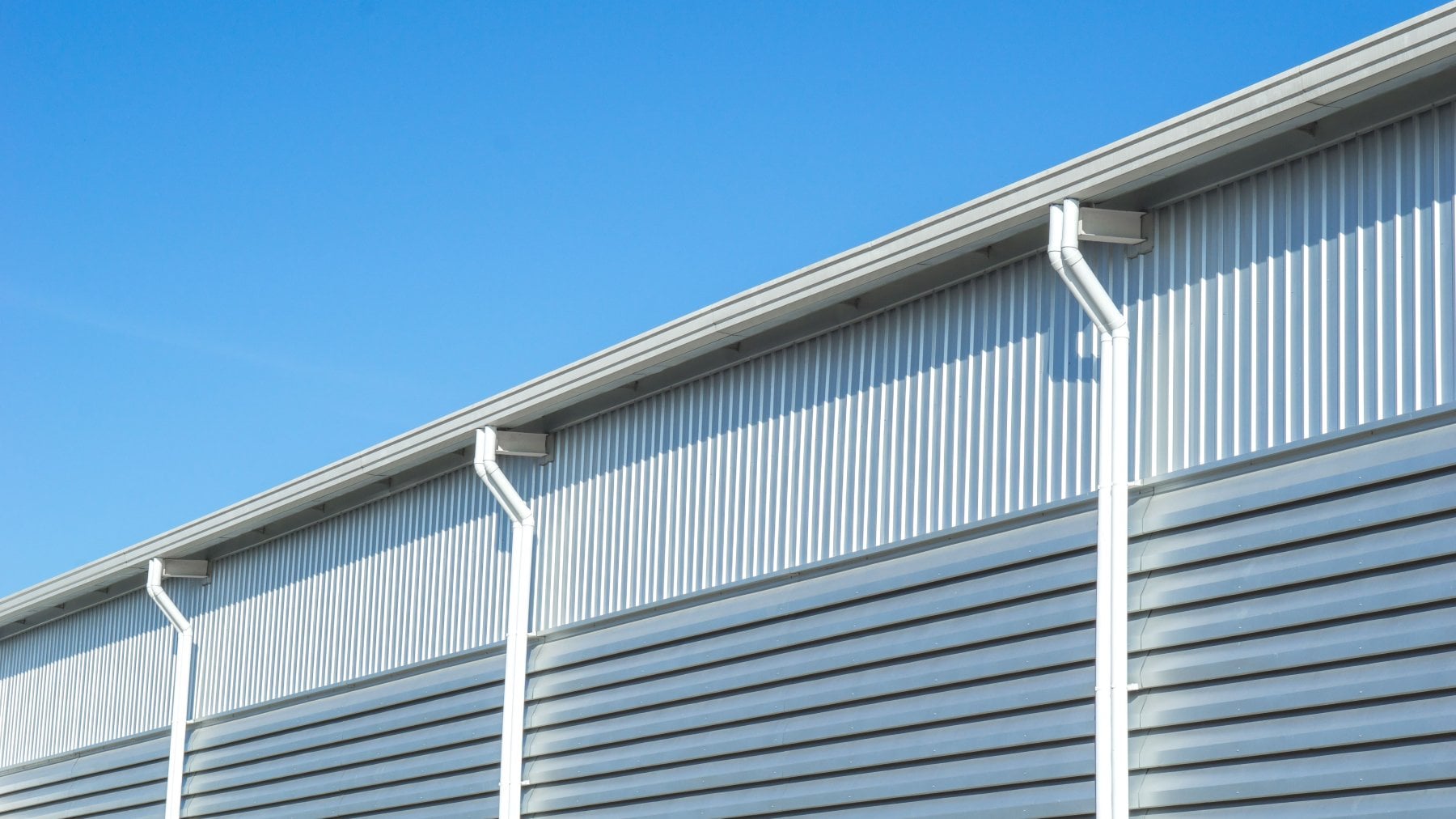
Downspouts are crucial for directing water away from the building. However, they can become clogged with debris or disconnected due to wear and tear. Regular inspections and repairs of downspouts prevent potential flooding or structural damage. Gutter accessories like downspout extensions can also be installed to improve drainage efficiency.
6. Installing Gutter Guards
Gutter guard installation is particularly beneficial for warehouses and industrial sites surrounded by trees or exposed to high levels of airborne debris. Gutter screens, a type of gutter guard, are an affordable and efficient option for keeping gutters clear.
7. Realigning Gutters
Misaligned gutters can cause water to overflow, leading to roof damage and erosion around the building’s foundation. Realigning gutters ensures proper drainage and prevents these issues.
This task often requires professional assistance, as it involves adjusting the slope and securing the gutters to the building. Facilities with copper gutters or mill-finish Aluminum systems should ensure that realignment is done carefully to avoid damaging the material.
8. Preventing Roof Damage
Gutters and roofs are interconnected systems. Clogged or malfunctioning gutters cause water pooling, mold growth, and structural damage. Regular gutter maintenance, including cleaning and repairs, is essential to prevent roof damage.
For facilities with extensive roofing systems, working with a trusted contractor can provide peace of mind. These professionals have the expertise to handle complex repairs.
Signs Your Warehouse or Industrial Site Needs Gutter Repair
Like any other part of a building, gutters can deteriorate over time. Recognizing the signs that your warehouse or industrial site needs gutter repair can save you from expensive repairs down the line.
1. Water Pooling Around the Foundation
One of the most obvious signs that your gutters are not functioning properly is water pooling around the foundation of your building. This indicates that the gutters are failing to direct water away from the structure, which can lead to foundation cracks, basement flooding, and even structural instability over time.
2. Overflowing Gutters
Overflowing gutters are often caused by clogs from debris like leaves and dirt. It may be due to an improper slope that prevents water from flowing toward the downspouts.
3. Sagging Gutters
Gutters that pull away or sag from the building are a serious concern. This can be caused by the weight of standing water due to clogs, or it may be due to the gutters being improperly secured. Sagging gutters need immediate attention to prevent them from detaching completely, which could lead to water damage and injury risks.
4. Visible Cracks or Holes
Small cracks or holes can be problematic. Over time, these minor issues can worsen, leading to water seeping into the building’s walls or foundation. Regular inspections while you plan your shipments help catch these issues early before they escalate.
5. Peeling Paint or Rust
These problems on the gutters or exterior walls of your building is a sign of water damage. Faulty gutters can cause water to overflow or leak onto the walls, leading to paint deterioration and rust formation. This not only affects the appearance of your building but also its structural integrity.
6. Mold or Mildew Growth
If you observe this problem on the walls or ceilings of your warehouse or industrial site, it’s a strong indicator that your gutters are not effectively diverting water away from the building.
7. Erosion Around the Property
Soil erosion near the building is another sign that your gutters are not functioning properly. When water is improperly diverted, it can wash away the foundation soil, leading to uneven ground and potential structural issues.
8. Stains on Walls or Ceilings
Water stains seen on the interior walls or ceilings of your building are a clear sign of leaks, often caused by gutter problems. These stains indicate that water is seeping into the building, which can lead to more severe damage if not addressed promptly.
Ignoring the signs of gutter damage can lead to significant problems for your warehouse or industrial site, including structural damage, mold growth, and costly repairs. If you notice any of the signs mentioned above, it’s crucial to address the issue immediately.
Frequently Asked Questions (FAQ)
1. How often should gutters be inspected?
Gutters should be inspected at least twice a year, ideally in spring and fall, to ensure they are functioning properly.
2. Can I repair gutters myself?
Minor repairs like cleaning or sealing small leaks can be done DIY, but for significant issues, it’s best to hire a professional.
3. What are gutter guards, and are they worth it?
Gutter guards are screens or covers that prevent debris from entering the gutter system. They are highly recommended for warehouses and industrial sites to reduce maintenance needs.
4. How long do gutters typically last?
With proper maintenance, gutters can last 20-30 years. However, harsh weather conditions and lack of care can shorten their lifespan.
5. What materials are gutters typically made from?
Gutters are made from aluminum, vinyl, steel, or copper. Each has its own advantages, with aluminum being lightweight and rust-resistant, vinyl being cost-effective, steel being durable, and copper offering a premium, long-lasting option.
6. How do I know if my gutters need to be replaced?
Visible cracks or splits, frequent leaks, and water damage or pooling around your foundation warrant repair or replacement. If repairs are no longer effective, replacement is likely necessary.
Bottom Line
Gutter repair is crucial in ensuring the longevity and safety of your warehouse or industrial site. You can prevent water damage, protect valuable assets, and ensure a safe working environment. Regular inspections, timely repairs, and proactive measures like installing gutter guards can save you from costly repairs and operational disruptions down the line.
Don’t wait for visible damage to appear. Prioritize gutter maintenance today to safeguard your facility for years to come.
Explore more opportunities with SeaRates by [contacting us] respective to your interest category